
EC Cleaners Network · Pricing & Procurement Guide
2026 UK commercial kitchen extraction pricing
How much does TR19 kitchen extract cleaning cost?
For a straightforward commercial kitchen extract system, the market price may begin in the hundreds of pounds. Larger restaurants, hotels, institutional kitchens and complex multi-system sites can move well into four figures.
The meaningful figure depends less on the size of the kitchen than on the extraction system being cleaned: duct length, grease loading, number of systems, fan position, access, vertical risers, working hours, evidence requirements and whether remedial access is needed.

Quick answer
Typical UK kitchen extract cleaning price ranges
Commercial kitchen extract cleaning is not normally priced from the kitchen floor area alone. The contractor needs to understand the extraction route, contamination, access and work required before a firm quotation can be produced.
For initial budgeting, publicly advertised 2026 UK contractor pricing suggests the following broad planning ranges. These are not EC Cleaners Network prices, quotations or guaranteed market rates.
£300–£750+
A small, straightforward single system with a relatively short and accessible extraction route.
£600–£1,500+
A typical restaurant, pub or medium commercial kitchen with a more developed duct route.
£1,000–£2,500+
A larger restaurant, hotel, canteen or institutional kitchen with greater system complexity.
£2,500–£5,000+
A complex site with several systems, multiple kitchens, difficult access or extensive ductwork.
Use these figures for budgeting—not contractor appointment.
Two systems in similarly sized restaurants can cost very different amounts if one has a short accessible duct run and the other has a multi-storey riser, roof fan and inadequate access.
Pricing methodology
What affects the cost of kitchen extract cleaning?
A contractor is not simply cleaning a room. The work relates to a mechanical extraction route that may continue from the canopy through concealed ductwork, risers and roof spaces before reaching a fan and final discharge.
The amount of labour, access equipment, cleaning time and reporting therefore changes considerably between systems.
Duct length & configuration
A short direct run is very different from a long extract route containing bends, offsets, branches and vertical risers.
Grease condition
The extent and condition of accumulated grease can affect labour, cleaning method and the amount of work required.
Number of systems
One commercial kitchen can contain several independent canopies, fans and extract routes rather than one single system.
Access
Missing panels, concealed ductwork, roof restrictions and inaccessible sections can materially affect the quotation.
Working hours
Night work, weekend access, permits, security, parking and shutdown restrictions can affect mobilisation and labour.
Evidence & reporting
Photographs, measurements, written reporting, exclusions and other agreed close-out evidence form part of the contractor scope.
What are you paying to clean?
The quotation should describe the extraction route—not just the canopy.
Terms such as “hood clean”, “extract clean”, “duct clean” and “TR19 clean” are often used loosely. They do not automatically describe the same amount of work.
BESA describes TR19® Grease as the specification for managing grease-related fire risk within commercial kitchen extraction systems. A commercial extraction route can extend considerably beyond the equipment visible from the kitchen.
Canopy
The collection hood positioned above the cooking equipment.
Filters & plenum
Grease-separation components and the internal chamber behind or above the filters.
Horizontal ductwork
The route carrying extracted air through ceilings, voids, corridors or service areas.
Vertical riser
Ductwork travelling vertically through one or several floors of the building.
Extract fan
The roof, wall or plant-mounted fan serving the kitchen extraction route.
Final discharge
The downstream termination where extracted air leaves the system.
Do not compare different products
A canopy clean and a full extract-route clean are not the same quotation.
Canopy-focused cleaning
This may concentrate on visible kitchen-facing equipment, filters and immediately accessible surfaces.
It may be appropriate for a defined routine task, but should not automatically be assumed to cover the complete grease-extract system.
Accessible ductwork cleaning
This may include the canopy, plenum and those sections of ductwork that existing access provision allows the contractor to reach.
Check whether risers, fans and final discharge are separately described.
Whole-system intended scope
The intended scope follows the relevant route through canopy, plenum, ductwork, risers, fan and discharge where applicable.
That does not mean every section is automatically accessible.
Access remediation
Where a relevant section cannot be reached, additional access or other enabling work may need to be separately defined and priced.
Comparing quotations
Why can two kitchen extract quotations be hundreds or thousands of pounds apart?
Price differences do not automatically mean that one contractor is expensive and another is cheap. They may be pricing different amounts of work, different access arrangements or different reporting requirements.
A £600 quotation and a £1,200 quotation cannot sensibly be compared until you know whether both cover substantially the same system.
System scope
Are both contractors pricing the same canopy, duct route, riser, fan and discharge?
Access assumptions
Has either supplier assumed that suitable duct and roof access already exists?
Working hours
Does the quotation include night, weekend or otherwise restricted working?
System condition
Are both suppliers working from the same information about contamination and previous maintenance?
Evidence
Do both quotations include comparable photographs, reporting and agreed verification information?
Exclusions
Are risers, fans, inaccessible ductwork or remedial access excluded from either quotation?
Compare scope before comparing totals.
A cheaper quotation may simply contain less work.
Access can change the job
Inaccessible ductwork can create additional work before the intended cleaning scope can be completed.
A contractor cannot clean internal surfaces that cannot physically be reached. Missing access panels, concealed duct routes, roof-level plant and vertical risers can therefore affect price or create a separate remedial requirement.
Existing access
Can the relevant sections already be reached safely through suitable access provision?
Additional openings
Will further duct access points be required before the relevant internal surfaces can be reached?
High-level work
Does the fan, external ductwork or other plant require specialist access equipment?
Roof arrangements
Are keys, permits, escorts, landlord permission or managing-agent arrangements needed?
Repeated exclusions
If the same section was inaccessible previously, has the underlying access problem actually been resolved?
Separate remedial price
Ask whether access work is included, separately quoted or expressly excluded.
Different systems · different workstreams
Kitchen grease extraction and general air-duct cleaning should not be treated as one service.
Search terms such as “duct cleaning cost” and “air duct cleaning cost” can refer to very different systems.
A building may contain both kitchen extraction and general ventilation, but they should be identified and scoped independently before contractor prices are compared.
TR19® Grease
Commercial kitchen extraction carrying grease-laden cooking vapours through the canopy, ductwork and fan route.
TR19® Air
General supply, return and extract ventilation cleanliness and hygiene.
Different contamination
Grease accumulation and general ventilation contamination require different cleaning considerations.
Different capability
The contractor capability should match the actual ventilation system and workstream being addressed.
“TR19 certificate cost”
First establish what document is actually included in the quotation.
“TR19 certificate” is often used as shorthand, but it can obscure several different pieces of post-clean documentation.
Ask the contractor exactly what evidence will be returned and whether any element is separately charged.
Post-clean report
The written record should identify the system and describe the work completed.
Photographs
Before-and-after images should be capable of being associated with identifiable system areas.
Test information
Where relevant testing is undertaken, the contractor should identify the locations and results.
Access limitations
Inaccessible, excluded or incomplete sections should remain visible in the close-out record.
Hygiene documentation
Ask what certificate or hygiene document will be issued and which system or site it references.
VHR notification
Where this forms part of the requirement, confirm the contractor’s current status and intended notification route.
Post-clean evidence
Decide what evidence you expect before the contractor is appointed.
BESA’s kitchen-extract guidance describes post-clean reporting that can include photographs, relevant test results, a written summary of work completed, access limitations and hygiene documentation.
Where a cleaning requirement has arisen from an insurer, landlord, fire-risk adviser or internal audit, the original instruction should remain visible when quotations are obtained.
Completed work
The final record should show what parts of the intended scope were actually addressed.
Outstanding work
Anything inaccessible, excluded or requiring another action should remain clearly identifiable.
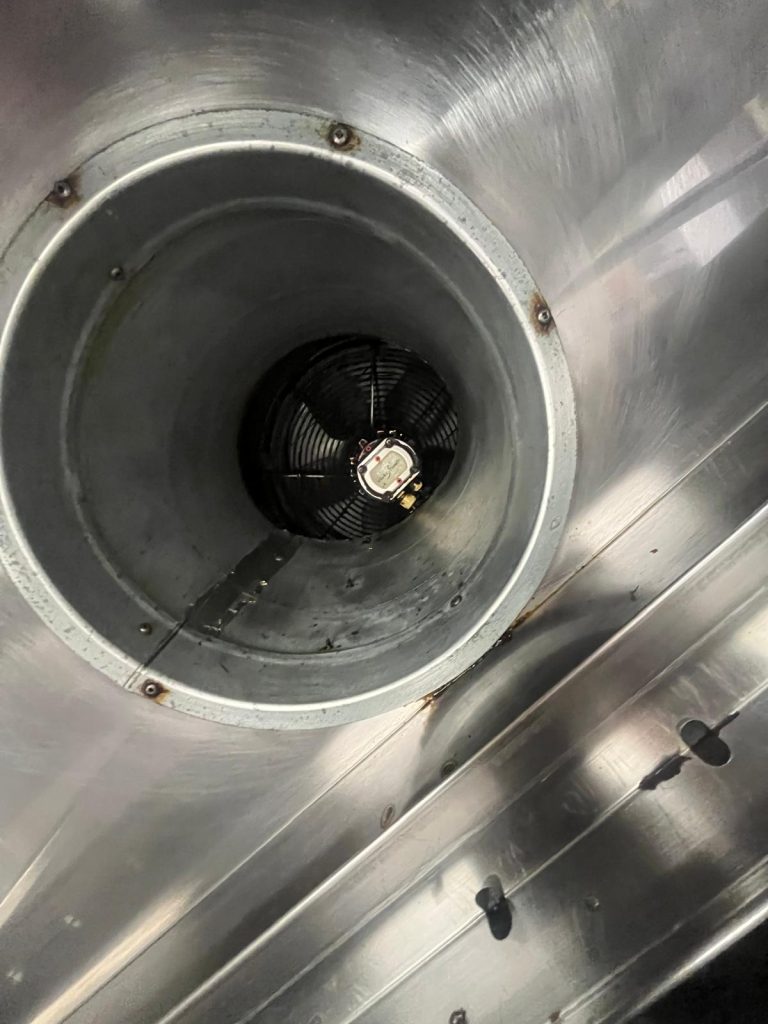
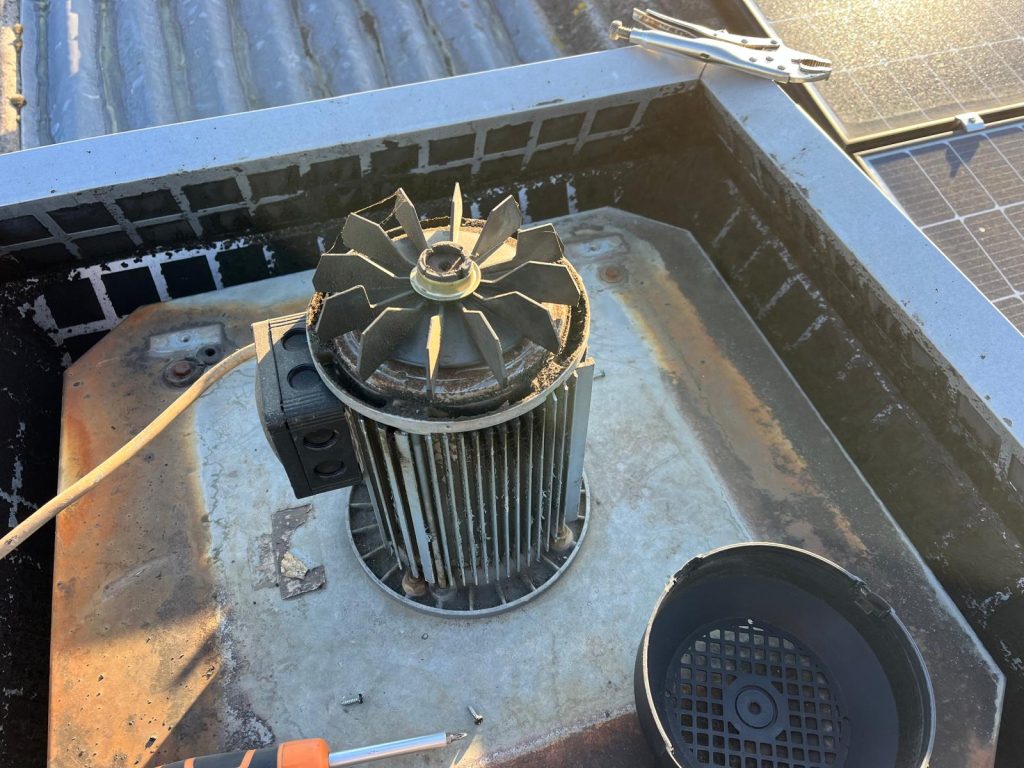
Why real systems price differently
The visible canopy tells you little about the full contractor workload.
Historic EC Cleaners project photographs demonstrate why pricing cannot sensibly be based on the visible kitchen alone. Downstream ductwork, fans and access conditions can make apparently similar kitchens completely different jobs.
These photographs are historic project context only. They are not current Search and Submit Ltd surveys, quotations or technical assessments.
Before accepting the price
A useful quotation should make the scope understandable.
The objective is not to force every contractor to use identical wording. It is to make enough information visible that you know what you are buying.
If a quotation simply says “TR19 clean – £X” without defining the system, access or evidence, ask for clarification before appointment.
System identification
Which kitchen, canopy and extraction route is being priced?
Included components
Which canopy, plenum, ductwork, riser, fan and discharge sections are included?
Access assumptions
What is accessible, unknown, excluded or subject to further assessment?
Working arrangements
Does the price assume normal hours, overnight work, roof access, permits or a shutdown period?
Exclusions
What physical work or system section is expressly outside the contractor’s quotation?
Evidence
What report, photographs, test information and documentation will be supplied?
Price basis
Is the figure fixed, provisional, survey-dependent or subject to additional access work?
EC Cleaners Network
EC can help make competing commercial scopes easier to understand.
EC Cleaners Network can organise customer-supplied reports, photographs, drawings and quotations; identify obvious differences in stated scope; highlight exclusions and access assumptions; and help structure a clearer commercial requirement before independent contractors are approached.
Search and Submit Ltd does not inspect the extraction system, calculate contamination, determine cleaning methodology, set contractor prices, determine TR19 compliance or certify completed work.
Organise
Bring reports, photographs, certificates and quotation information together.
Compare
Identify obvious stated differences between competing commercial scopes.
Highlight
Surface access assumptions, exclusions and missing documentary information.
Independent contractor
Technical assessment, method, price, physical work, reporting and certification remain the responsibility of the appointed specialist.
Pricing questions
TR19 kitchen extract cleaning cost: frequently asked questions
How much does TR19 kitchen extract cleaning cost?
Published UK contractor pricing suggests straightforward systems can begin in the hundreds of pounds, while larger or more complicated commercial systems commonly move into four figures. Actual price depends on the extraction route, contamination, access and working arrangements.
Why is one quotation much cheaper?
The contractors may not be pricing the same work. Compare system scope, ductwork, fan access, working hours, reporting and exclusions before comparing the final total.
Does TR19 cleaning include ductwork?
The quotation should identify the relevant extraction route and make clear which duct sections, fan and other components are included or excluded.
Are access panels included?
Not automatically. Additional access work may be included, separately quoted or assumed to be already available.
Is a TR19 certificate included?
Ask exactly which report, hygiene document, photographs, measurements and any relevant VHR notification are included in the price.
Is air-duct cleaning the same?
No. Commercial kitchen grease extraction and general ventilation hygiene are separate workstreams and should be scoped independently.
Does overnight work affect cost?
It can. Labour, mobilisation, access and site-management requirements vary according to the working window.
Can several kitchens be quoted together?
Yes. Multi-system and multi-site requirements can be organised together, but each extraction system should remain individually identifiable.
Have a quotation already?
Send the quote, report and photographs before commissioning another undefined “TR19 clean”.
EC can organise the information already available, make stated scope differences easier to see and help turn the requirement into a clearer commercial enquiry for independent specialist contractors.
Pricing methodology and responsibility:
The price ranges on this page are broad market-planning indications derived from publicly advertised UK contractor pricing reviewed in September 2026. They are not Search and Submit Ltd prices, quotations, tariffs or guarantees and should not replace an actual contractor quotation based on the relevant system and site conditions.
EC Cleaners Network is operated by Search and Submit Ltd. Search and Submit Ltd does not inspect, clean, test, survey, design, remediate or certify kitchen extraction or ventilation systems and does not set independent contractor prices. Independent appointed contractors remain responsible for technical assessment, quotations, safe working, physical delivery, reporting, certification and applicable notifications within their own scope.
TR19® Grease and TR19® Air are BESA specifications. References are descriptive and no BESA endorsement of or affiliation with EC Cleaners Network is claimed.
Guide reviewed: 13 September 2026.