
Kitchen Extract Cleaning at Pinkmead Bistro & Tearooms, Botley
A commercial kitchen-extraction project where the requirement extended from the cooker hood through difficult-to-reach ductwork to a roof-mounted extract fan.
The Pinkmead project is a useful example of why a kitchen-extract scope should follow the complete route rather than stop at the visible canopy. The historic record describes grease build-up in the hood, ductwork and roof fan, difficult access to parts of the duct route and the need to complete the work with minimal disruption to the operating kitchen.
If you have a previous report, photographs, roof-fan information or an extract route that is difficult to access, send it with the enquiry. Those details can materially change what a contractor needs to price and prepare for.

The visible hood was only the starting point.
The surviving project record identifies a cooker hood, ductwork and roof-fan requirement. That makes Pinkmead a strong example of why system scope, access and operating constraints should be understood before a specialist kitchen-extract job is treated as a simple canopy clean.
Hospitality setting
Pinkmead Bistro & Tearooms at Pinkmead Farm in Botley, Hampshire, operating a commercial kitchen within a live hospitality environment.
Whole-route requirement
The archive records work involving the cooker hood, internal ductwork and roof-mounted extract fan.
Difficult access
Parts of the ductwork were described as hard to reach, making access capability part of the contractor requirement.
Operational constraint
The project needed to be completed efficiently so that disruption to the kitchen operation was kept to a minimum.

The system continued from the kitchen to the roof.
The Pinkmead archive is particularly useful because it contains evidence from both ends of the system: the stainless-steel cooker hood inside the kitchen and the extract fan at roof level. For facilities and hospitality buyers, that makes the scope question very clear — which parts of the route are actually included?
Cooker hood & canopy
The visible kitchen-facing section formed part of the recorded requirement and provides the starting point for the extraction route.
Internal ductwork
The project record refers to grease build-up and difficult-to-reach ductwork between the kitchen and downstream fan.
Roof-mounted fan
The roof fan formed part of the historic scope and required separate access from the kitchen itself.
System boundary
A quotation for a similar site should make clear whether canopy, plenum, ductwork, fan and final discharge are included, accessible or subject to further assessment.
Difficult-to-reach ductwork can determine whether the intended system scope is actually deliverable.
A contractor can only clean and document the sections it can reach safely. The Pinkmead record identifies hard-to-reach ductwork, which means access was not a peripheral issue — it was part of the physical requirement.
The archive makes the system route unusually easy to understand.
The project photographs show the hospitality premises, the cooker hood and the roof-mounted fan. Together they illustrate why a buyer should think in terms of the complete extraction route rather than one visible component.
Hospitality premises
The building around the system
The venue photograph places the extract requirement inside a real hospitality property rather than treating it as an isolated piece of plant.

Kitchen-facing section
Cooker hood & canopy
The stainless-steel hood is the most visible part of the extraction system but not the whole route.
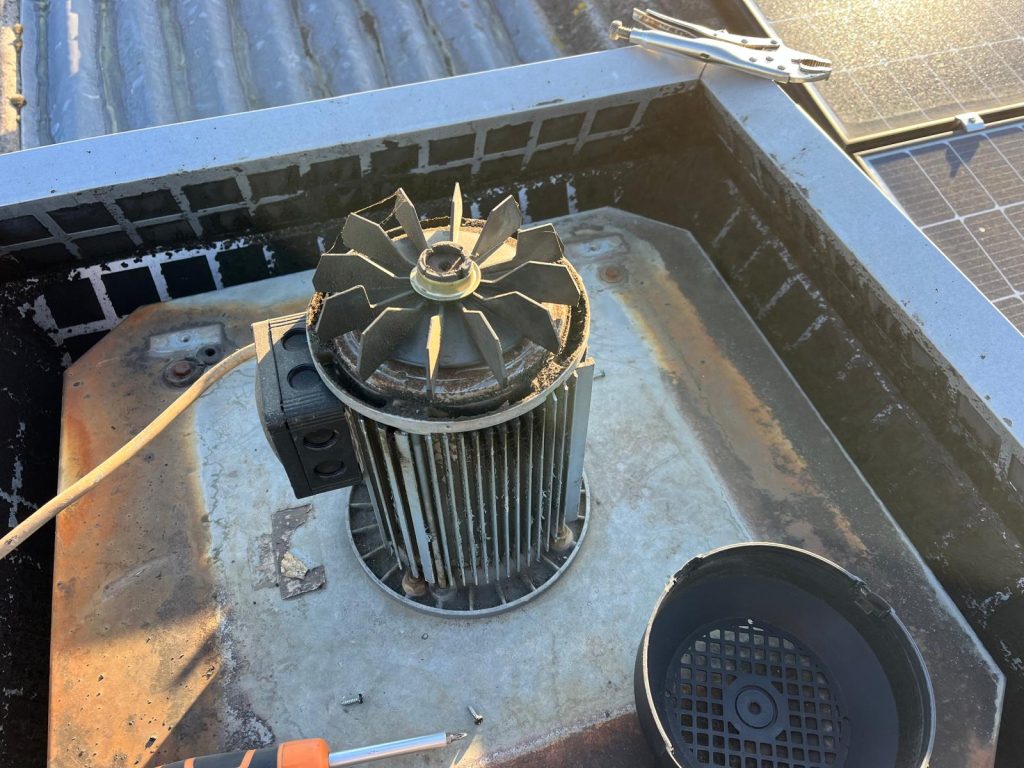
Roof fan
Downstream plant
The archive records the roof-mounted fan as part of the extraction-cleaning requirement.

Roof environment
Access around the fan
The wider roof image shows why access to plant cannot be understood from a kitchen photograph alone.
The contractor needed to fit the system, the access conditions and the operating window.
Pinkmead is a strong contractor-selection case study because the job combined internal grease-extract work, difficult duct access and roof-level plant within a working hospitality business.
For a buyer, the lesson is straightforward: contractor capability should be matched to the physical route in front of you, not to a generic service label. A supplier who can clean an accessible canopy is not automatically equipped for hard-to-reach ductwork and roof-level fan work.
What should the operator or facilities team have ready?
You do not need a perfect drawing of the extraction system. Existing reports, photographs and practical site knowledge can still make the first contractor enquiry materially better.
It makes the difference between “clean the hood” and “address the extraction system” visible.
That distinction is central to good procurement. The Pinkmead archive shows a real route from the cooking area to downstream roof plant and demonstrates why access and scope need to stay connected.
Send the report, photographs and access information you already have.
EC Cleaners Network can help organise the commercial requirement, make the intended system boundary and access issues clearer and approach potentially appropriate independent specialist capability. You do not need to map the whole duct route yourself before contacting us.
This case study is based on the surviving EC Cleaners project record and photographs. It records historic kitchen-extraction work involving the cooker hood, ductwork and roof-mounted fan at Pinkmead Bistro & Tearooms. The page should not be treated as a current system survey, current condition assessment, fire-risk assessment, insurance opinion or retrospective technical approval of the original works. EC Cleaners Network is operated by Search and Submit Ltd. Search and Submit Ltd does not inspect, clean, test, survey, certify or technically approve kitchen extraction or ventilation systems. Independent appointed contractors and relevant competent professionals remain responsible for technical assessment, access methodology, safe working, physical delivery, reporting, certification and professional conclusions within their appointed scope.