
EC Cleaners Network · Kitchen Extract Questions
There is no single cleaning interval that is correct for every commercial kitchen.
TR19® Grease provides useful cleaning-frequency benchmarks, but the appropriate maintenance regime should reflect the actual kitchen: operating hours, cooking methods, grease production, system condition, previous evidence, fire-risk findings, access and relevant insurer requirements.
Tell us what has triggered the requirement
Send the site location, when the system was last inspected or cleaned and anything you already know about the kitchen, operating hours or previous report. If you have a certificate, report, photographs, quotation, insurer correspondence or fire-risk action, include that where possible.
How often should commercial kitchen extraction be cleaned?
BESA currently describes TR19® Grease minimum cleaning-frequency benchmarks based on daily kitchen use. These provide a useful starting point for maintenance planning, but BESA also makes clear that the real interval may need to be shorter according to the type of cooking, condition of the system and the findings of insurance or fire-risk assessments.
Heavy use
12–16 hours per day
TR19® Grease benchmark: approximately every 3 months.
Moderate use
6–12 hours per day
TR19® Grease benchmark: approximately every 6 months.
Light use
2–6 hours per day
TR19® Grease benchmark: approximately every 12 months.
The 3 / 6 / 12-month table is a benchmark, not the entire answer. A busy high-grease kitchen and a lighter cooking operation can accumulate contamination at very different rates even when their opening hours look similar.
Why operating hours alone do not decide the cleaning interval
The useful question is not simply “how many hours is the kitchen open?” The maintenance regime should reflect how the extraction system is actually being used and what previous evidence shows.
- Cooking method and grease production.
Frying, chargrilling and other grease-producing cooking processes can load the extract system differently from lighter cooking. - Operating hours and intensity.
Long opening hours matter, but so does what is happening during those hours and how heavily the cooking line is used. - Previous system condition.
Earlier reports, photographs and deposit measurements can indicate whether the existing interval is allowing excessive grease accumulation. - System scope.
The maintenance regime should relate to the relevant extract route rather than only the visible canopy or filters. - Fire-risk findings.
A fire-risk assessment or other competent fire-safety review may identify the extract system as an issue requiring action. - Insurance requirements.
Policy wording, insurer surveys or risk-engineering recommendations may create additional maintenance or evidence expectations. - Access and exclusions.
If relevant ductwork or fan sections have repeatedly been inaccessible, the date on a previous certificate may not describe the condition of the whole route.
The cleaning date should relate to the real extract system
The visible canopy is only the starting point of many commercial kitchen extract systems. Depending on the installation, the route can include filters, plenums, horizontal and vertical ductwork, risers, fans and the final discharge.
A maintenance interval is much more useful when the system being inspected or cleaned is clearly identified and any inaccessible or excluded sections remain visible in the records.
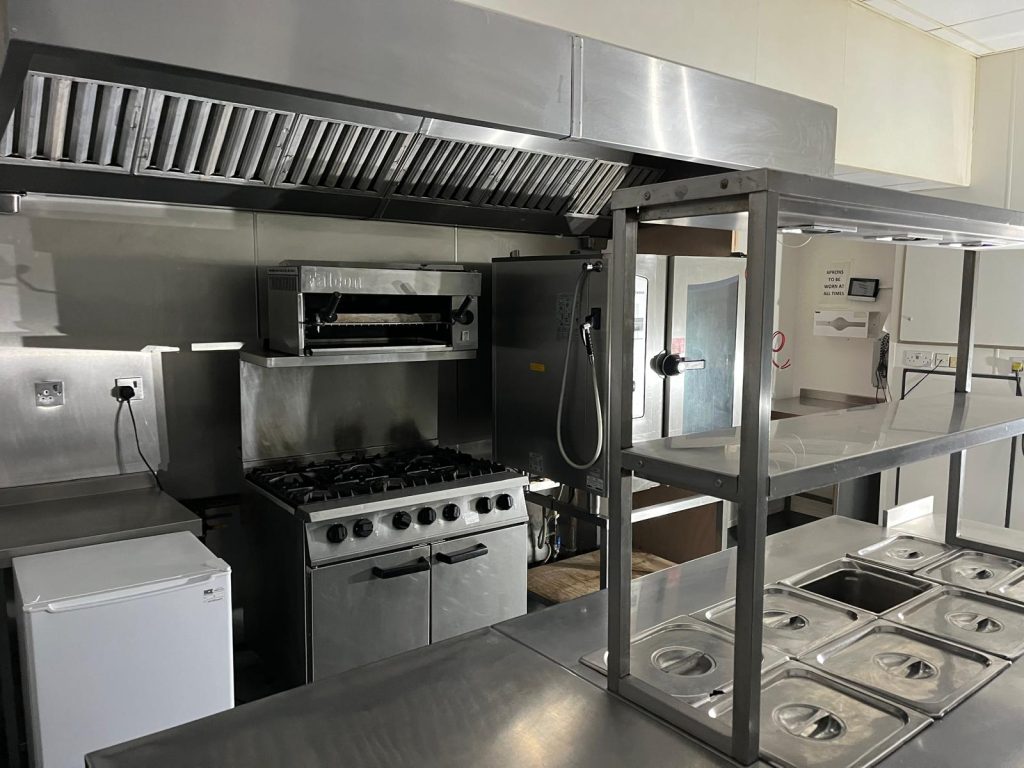
Historic EC Cleaners project imagery is used to illustrate a commercial kitchen extraction environment. It is not presented as a technical finding about the property making an enquiry.
How should the next kitchen extract cleaning date be decided?
Copying the date from an old certificate may be convenient, but it is not always enough. A more defensible maintenance decision keeps the operating conditions and previous evidence visible.
- Confirm the operating profile.
Record typical daily hours, the type of cooking and any seasonal or operational changes that materially affect kitchen use. - Review the previous scope.
Identify which canopy, plenum, duct sections, risers, fans and discharge sections were included. - Check exclusions and inaccessible areas.
A previous visit may have left sections unresolved even though a report or certificate was issued. - Review condition evidence.
Photographs, previous observations and deposit-thickness measurements can help show how quickly contamination has accumulated. - Check risk and insurance information.
Keep relevant fire-risk actions, insurer requirements and property-management instructions with the maintenance record. - Record the basis for the next interval.
The next facilities manager, contractor, insurer or auditor should be able to understand why the date was chosen.
Is the TR19 cleaning interval a legal requirement?
TR19® Grease is an industry specification rather than a statute. It is therefore important not to describe the 3, 6 and 12-month benchmarks as a universal legal timetable.
For premises in England and Wales, the Regulatory Reform (Fire Safety) Order 2005 requires the responsible person to make a suitable and sufficient assessment of fire risk and take appropriate general fire precautions. It does not prescribe one identical kitchen-extract cleaning interval for every premises.
London Fire Brigade separately advises restaurants and takeaways that kitchen ducting should be cleaned regularly to avoid grease build-up. In May 2026, the Brigade reported a restaurant fire in Lee Green believed to have been caused by grease build-up in ducting, illustrating why the condition of the extract route matters.
What if the previous report recommends action before the normal interval?
The previous report should be read for more than its certificate date. It may identify inaccessible sections, heavy contamination, incomplete cleaning, access requirements, damaged components or another recommendation that should be addressed before simply waiting for the next routine visit.
If a report, certificate, quotation or set of photographs is difficult to interpret, keep it intact and compare the documented system scope, completed work, exclusions and outstanding actions.
What evidence should be retained after cleaning?
The maintenance record should make it possible to understand what happened without relying on somebody’s memory months later.
System identity
Which kitchen, canopy and extraction route the work relates to.
Scope completed
Which sections were inspected, cleaned or otherwise included in the contractor’s appointed work.
Photographic evidence
Images that can be related to identifiable sections of the system rather than anonymous close-ups.
Exclusions
Anything inaccessible, outside scope, deferred or not completed should remain visible.
Further actions
Access work, mechanical concerns or other recommendations should not disappear when the routine clean is closed.
Next review
The record should show the proposed next interval and, where possible, the basis on which it has been determined.
Is the system due? Define the requirement before asking for a price
A useful contractor enquiry identifies the property, the relevant kitchen extract system, why the work is due, known access restrictions, previous evidence and the records expected after completion.
Price comparisons are more meaningful when contractors are being asked to address the same system boundary and evidence requirement.
Which kitchen extract question are you trying to resolve?
Cleaning frequency is only one route. If the problem is different, move to the question that best describes the actual situation.
Kitchen extract cleaning frequency: frequently asked questions
How often should a commercial kitchen extract system be cleaned?
There is no single interval that is correct for every kitchen. BESA describes TR19® Grease benchmark frequencies of approximately 3 months for heavy use, 6 months for moderate use and 12 months for light use, while also stating that actual frequency should reflect factors such as cooking type, system condition, grease accumulation, fire-risk findings and insurance requirements.
Does TR19 mean every kitchen must be cleaned every 3, 6 or 12 months?
No. The 3, 6 and 12-month periods are useful baseline benchmarks, not a substitute for considering the actual kitchen, cooking load, condition of the extract system, previous reports and relevant risk or insurance requirements.
Is TR19 kitchen extract cleaning frequency a legal requirement?
TR19® Grease is an industry specification rather than a statute. In England and Wales, the Regulatory Reform (Fire Safety) Order 2005 requires the responsible person to assess fire risk and take appropriate fire precautions, but it does not prescribe one universal kitchen-extract cleaning interval.
Can an insurer require a different kitchen extract cleaning frequency?
Potentially. A policy condition, insurer survey or risk-engineering recommendation may create a particular maintenance or evidence requirement. The actual policy wording and correspondence should be checked rather than assuming that a generic frequency will satisfy every insurer.
What if the previous clean left some ductwork inaccessible?
The inaccessible sections should remain visible in the next requirement. A cleaning date does not resolve an access problem; additional access, safe high-level access or other enabling work may be needed before the affected sections can be properly inspected or cleaned.
What evidence should be kept after kitchen extract cleaning?
Keep the contractor report, certificate where provided, photographs or other evidence, the identified system scope, exclusions, inaccessible areas, remedial recommendations and the basis for the next inspection or cleaning date.
Who should decide the next kitchen extract cleaning date?
The maintenance regime should be based on the actual system and operating conditions, using competent technical input where required. Previous condition, grease accumulation, cooking activity, risk findings, access and insurer requirements can all affect the appropriate interval.
Is your commercial kitchen extract system due for attention?
Send the site location, previous cleaning date and any report, certificate, quotation, photographs or other system information already available.
You do not need to decide the contractor scope before contacting EC. The existing evidence and the reason the system is being reviewed are often the best place to start.
Responsibility statement:
EC Cleaners Network is operated by Search and Submit Ltd. Search and Submit Ltd does not inspect, clean, test, survey, design, remediate, certify or technically approve kitchen extraction or ventilation systems. Independent appointed contractors and competent professionals remain responsible for technical assessment, safe working, quotations, physical delivery, reporting, certification and professional conclusions within their appointed scope.
TR19® Grease and TR19® Air are BESA specifications. References are descriptive and no BESA endorsement of or affiliation with EC Cleaners Network is claimed.