
EC Cleaners Network · From Requirement to Evidence
If somebody has told you to get the kitchen extraction cleaned, keep the original instruction before asking contractors for prices.
The useful starting point is who raised the action, which system it applies to, what they actually asked for and what evidence they expect afterwards. An insurer’s condition, a fire risk assessment action, a landlord requirement and a routine maintenance instruction can all lead to cleaning, but they should not be treated as though they are identical.
What has triggered the cleaning requirement?
Send the original report, email, insurance wording, fire risk action, landlord instruction or maintenance document if you have it. Include the site location and any existing kitchen extract cleaning report or certificate.
Search and Submit Ltd uses your details to respond and coordinate the enquiry, including sharing relevant information with appropriate independent specialists. Read our Privacy Policy. Please omit unrelated personal or sensitive information.
What should you do first?
Do not reduce the requirement to “we need a TR19 clean” until you have checked the source document. The wording may identify a particular kitchen, extraction system, inspection finding, access problem, cleaning frequency, completion deadline or evidence requirement.
BESA says TR19® Grease was produced in response to requirements from insurers, property owners and regulatory bodies and defines industry best practice for inspection, cleaning and fire risk management of kitchen extract ventilation.
Keep the trigger, scope and close-out evidence together from the beginning.
Who has told you to take action?
Insurer or insurance surveyor
Keep the policy wording, risk improvement notice or survey recommendation. Insurance conditions can affect cleaning frequency, evidence and contractor expectations.
Fire risk assessor
Keep the exact action, priority and target date from the fire risk assessment. The cleaning scope should respond to the identified fire risk rather than a shortened verbal version of the recommendation.
Landlord, managing agent or property owner
Ask for the written requirement and any building, lease, insurer or fire safety context behind it. This helps prevent different parties expecting different evidence at completion.
Facilities or estates team
The trigger may be planned maintenance, an overdue clean, a previous contractor recommendation or a portfolio standard. Keep the site-specific evidence with the instruction.
Previous extract contractor
A report may recommend cleaning, a shorter return interval, additional access or another follow-up action. Check the findings before issuing a new scope.
Local authority or other enforcing body
If formal correspondence has been received, preserve the exact wording, deadline and requested evidence. Do not paraphrase an enforcement or regulatory action into a generic cleaning request.
Does the instruction say exactly what needs cleaning?
Sometimes it does. Often it does not. A phrase such as “clean the kitchen extraction” can refer to very different physical scopes.
The extract route may include filters, canopy, plenum, horizontal and vertical ductwork, risers, fan and discharge. The contractor quotation should make clear which parts are included, which require specialist access and which cannot be reached under the proposed scope.
The certificate is not the scope. The physical system and the work required need to be defined first.
What if the requirement came from a fire risk assessment?
The Regulatory Reform (Fire Safety) Order 2005 is the main fire safety legislation for non-domestic premises in England and Wales. Government guidance says the responsible person must undertake and record a fire risk assessment and put in place and maintain general fire precautions.
BESA describes grease accumulation in commercial kitchen extraction systems as a serious fire hazard and says TR19® Grease supports the inspection, cleaning and management of that risk.
Where the fire risk assessment identifies kitchen extraction, preserve the original finding. The contractor can then respond to the actual physical scope while the responsible person and fire risk assessor retain their own roles in fire safety management and review.
What if the requirement came from an insurer?
Do not assume that every insurer uses the same wording or maintenance interval. Keep the actual policy condition, survey recommendation or risk improvement notice and check whether it refers to frequency, contractor competence, system scope, certification, photographs or another form of evidence.
Fire and rescue service guidance also notes that insurance policies may include conditions about the frequency of specialist kitchen ventilation cleaning.
The objective is to satisfy the actual policy or risk requirement, not somebody’s memory of what insurers usually ask for.
What if the previous report identified inaccessible ductwork?
An access limitation should not disappear when a new cleaning quotation is requested. If part of the duct route could not be inspected or cleaned, the condition of that section remains unresolved until suitable access is provided or another competent solution is agreed.
BESA’s current public guidance emphasises comprehensive access through the duct system for effective cleaning. A quotation that covers only the reachable areas may therefore be a different job from the one needed to close the original action.
What should you send to potential contractors?
- The original trigger. Send the insurer wording, fire risk action, landlord request, report recommendation or other instruction.
- Site and system identity. State which kitchen and extraction system the requirement applies to.
- Previous reports. Include cleaning, inspection and access information where available.
- Known limitations. Make inaccessible sections, roof access, high-level work and other constraints visible before pricing.
- Required evidence. State what needs to come back after completion, especially where another party must review it.
- Timescale. Include any genuine completion date or priority from the source document.
This gives contractors a better basis for comparable quotations and reduces the risk of discovering major exclusions only after appointment.
Do not compare quotations until the scope is comparable
One quotation may cover the canopy and accessible ductwork. Another may allow for fan access, roof work, additional panels, deposit measurements and detailed post-clean evidence. The headline price alone does not tell you whether the contractors are pricing the same job.
Compare the included system sections, access assumptions, exclusions, evidence package, certification, working hours and any additional remedial work before comparing the final figures.
Compare the deliverables first, then compare the price.
What should come back after the cleaning?
BESA’s January 2026 public guidance says post-clean verification should include before-and-after photographs from matching positions, DTT or WFTT measurements, a written summary of the work completed, access limitations or areas requiring attention, cleaned-area information and a hygiene certificate.
The returned evidence should allow the client and the party that raised the original action to understand what was completed, what was not completed and what remains outstanding.
The action is not closed just because a certificate exists
A certificate can be an important part of the evidence package, but it should not hide exclusions, inaccessible areas or outstanding recommendations. The close-out question is whether the completed physical work and returned evidence respond to the original requirement.
If an insurer, fire risk assessor, landlord or another professional raised the action, they may need to review the returned evidence within their own role. The cleaning contractor should not be asked to make conclusions that belong to another professional appointment.
The certificate is important, but the certificate is not the whole job.
A practical requirement-to-evidence workflow
- Preserve the original instruction. Keep the wording, source, priority and deadline.
- Identify the system. Confirm the kitchen and extraction route involved.
- Review existing evidence. Check previous reports, photographs, measurements and access limitations.
- Define the physical scope. Make clear which parts need inspection, cleaning, access or other remedial work.
- Select the appropriate contractor. Match competence and capability to the actual requirement.
- Complete the work. Keep variations and newly discovered limitations visible.
- Collect the evidence. Obtain the report, photographs, measurements, certificate and outstanding actions.
- Return the evidence. Send it to the person or organisation that needs to review the original action.
What if the real problem is not cleaning?
Sometimes a request arrives as “get the extraction cleaned” when the underlying issue is poor airflow, smoke spillage, a failing fan, inaccessible ductwork or unclear evidence from earlier work. If the symptoms point beyond contamination, the requirement should be separated before contractors are instructed.
Historic project context
Kitchen extract cleaning is physical work carried out across an identified system scope. Internal duct sections may need specialist access and the final evidence needs to relate back to identifiable parts of that system.
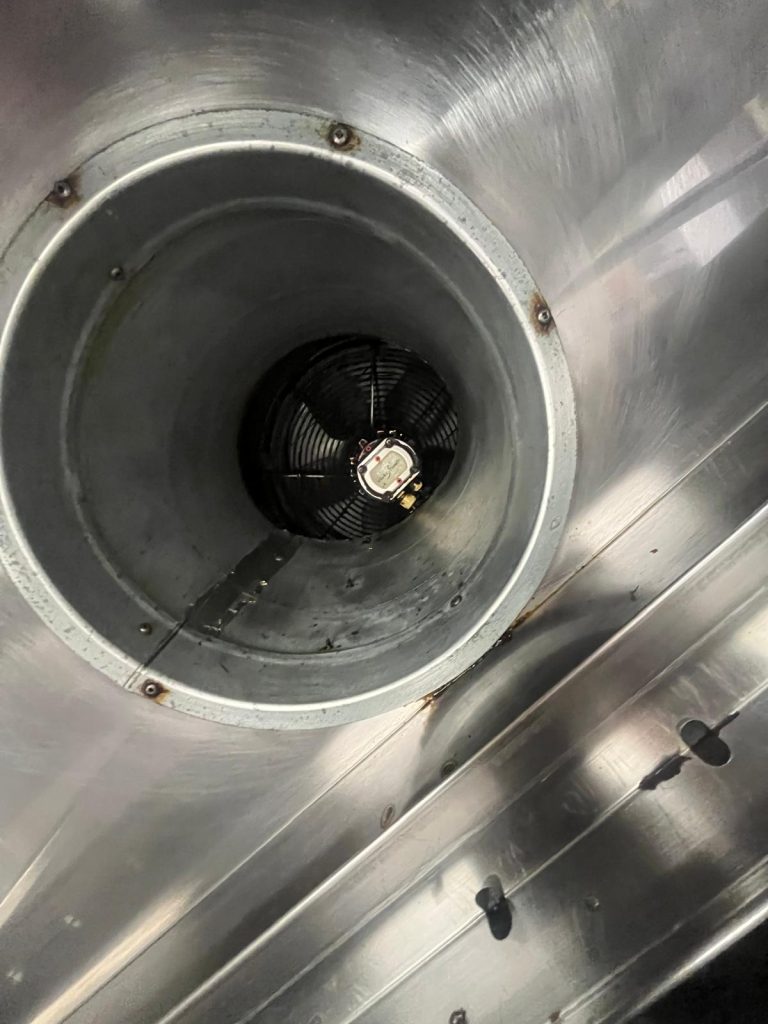
Historic EC Cleaners project imagery illustrates internal kitchen extract ductwork. It is not presented as evidence of a current insurer, fire risk or regulatory action at the photographed premises.
Related commercial kitchen extract guidance
Use the wider question hub if you are still establishing what type of requirement you have. Use the cleaning, scope, access and evidence pages when the workstream is already clear.
Told to get the kitchen extraction cleaned: frequently asked questions
What should I do if I have been told to get the kitchen extraction cleaned?
Keep the original instruction, report or correspondence and identify who raised the action, which kitchen or extract system it relates to, what work was requested and what evidence they expect afterwards. This gives the contractor a clearer scope and reduces the risk of completing work that does not close the original requirement.
Does being told to clean the extract automatically mean I need a full TR19 clean?
Not automatically. The requirement may refer to a full kitchen extract route, a particular system, an identified contaminated section, an overdue maintenance action or a recommendation following inspection. The original wording and system scope should be checked before the work is priced.
What if the requirement came from an insurer?
Keep the insurer’s wording, policy condition, survey recommendation or risk improvement notice. Insurance requirements can affect cleaning frequency, evidence and contractor expectations, so the contractor should respond to the actual requirement rather than a shortened verbal summary.
What if the action came from a fire risk assessment?
Keep the fire risk assessment wording and any stated priority or completion date. The responsible person remains responsible for managing fire risk, while the appointed contractor is responsible for the technical work and evidence within their scope.
What if the previous report says parts of the ductwork were inaccessible?
Treat the access problem as a separate action. Cleaning the reachable sections does not establish the condition of the inaccessible ductwork. Access panels, high-level access or another enabling measure may be needed before the full intended scope can be completed.
What evidence should I ask for after the cleaning?
BESA’s current public guidance describes post-clean verification that includes before-and-after photographs, DTT or WFTT measurements, a written summary of work completed, access limitations or areas requiring attention, cleaned-area information and a hygiene certificate.
Can EC Cleaners Network confirm that the requirement has been technically closed?
No. EC can help organise the original trigger, reports, scope, contractor route and returned evidence. The competent contractor, fire risk assessor, insurer, landlord, enforcing authority or other relevant professional remains responsible for technical conclusions and acceptance within their own role.
Have you been told to get the kitchen extraction cleaned?
Send the original requirement, site details and any existing reports. EC can help organise the trigger, physical scope, access questions, contractor route and expected evidence so the instruction is not reduced to a vague request for a certificate.
Responsibility statement:
EC Cleaners Network is operated by Search and Submit Ltd. Search and Submit Ltd does not inspect, clean, test, survey, design, remediate, certify or technically approve kitchen extraction or ventilation systems. Independent appointed contractors and competent professionals remain responsible for technical assessment, safe working, quotations, physical delivery, reporting, certification and professional conclusions within their appointed scope.
TR19® Grease and TR19® Air are BESA specifications. References are descriptive and no BESA endorsement of or affiliation with EC Cleaners Network is claimed.