
EC Cleaners Network · Care Homes · Kitchen Extraction & Ventilation
Residents and meal service cannot simply stop because specialist maintenance work is due.
Care-home kitchen extraction and ventilation work has to fit around a continuously occupied building, catering routines, resident welfare, staff movement and the operator’s own estates and safety controls. EC Cleaners Network helps turn the identified problem into a clearer contractor requirement before independent specialist work is commissioned.
Tell us what has happened at the home
Send the home, kitchen or ventilation area, what has triggered action, the realistic working window and any report, certificate, quotation, fire-risk recommendation, insurer request or photographs already available.
Start with the situation
What needs to be resolved?
Care-home enquiries often begin with a maintenance date, an external action, an access problem or a kitchen that is not performing as expected. Start with the operational issue rather than trying to name the technical service first.
The kitchen extract system may be due for cleaning
You need to know whether the current interval still reflects the kitchen’s operating pattern, cooking processes and available evidence.
The extraction is not performing properly
Smoke, weak pull, excessive heat or fan problems should be understood before another clean is assumed to be the answer.
An insurer or fire-risk assessor has asked for action
Keep the original recommendation visible so the contractor work and evidence can be matched back to what was actually requested.
Part of the system could not be reached
A repeat maintenance visit can reproduce the same exclusion unless the access problem is turned into a separate remedial task.
You manage several care homes
You need one estate view of due dates, reports, contractors, access limitations and open actions without losing the detail of each home.
Why care homes are different
The maintenance window sits inside a 24-hour care environment
A care home remains occupied while the work is being planned and carried out. Residents, carers, catering staff, visitors and other essential routines continue around the maintenance activity.
The practical job therefore includes much more than the extract system itself. The team needs to understand when the kitchen can be released, how meals will continue, where contractors will enter, whether equipment or noisy work passes through occupied areas and what happens if the planned work cannot be completed in the available window.
Meal continuity
Planned downtime should reflect how residents will continue to receive meals, drinks and other catering support.
Occupied premises
Contractor routes, noisy work, equipment movement and high-level activity may need tighter control than in an empty commercial unit.
Resident welfare
Work areas and contractor activity need to remain compatible with the home’s own risk, access and safeguarding arrangements.
Access constraints
Ductwork may pass through ceilings, risers, roofs or spaces where access has to be agreed before attendance.
Return to service
The kitchen needs a realistic hand-back point because catering cannot usually be displaced for long.
Management records
Reports, photographs, certificates and open actions should be understandable to the home, group estates team and relevant advisers.
Cleaning and maintenance
Use the current kitchen and evidence, not a remembered calendar rule
Care-home kitchens can operate for long hours and support several meal periods every day. The appropriate maintenance regime should reflect the actual kitchen, cooking processes, previous evidence and system condition rather than relying only on an inherited interval.
How often should it be cleaned?
Use the actual operating pattern and available maintenance evidence.
Does it need cleaning now?
Check current condition and evidence rather than relying on a date alone.
How should the next date be set?
The next cleaning date should reflect the specific home and extract system.
When performance is the problem
Smoke, heat and weak extraction are not automatically cleaning issues
HSE guidance says kitchen ventilation is needed to remove fumes and heat and should provide adequate replacement air. If the kitchen is smoky, excessively hot or not capturing properly, cleaning may be relevant but the cause can also involve the fan, controls, replacement air or another technical issue.
Extractor fan not pulling properly
The fan appears to run but capture at the cooking line is weak.
Kitchen too hot
The extraction is operating but the working environment remains excessively hot.
Care regulation and premises management
Keep CQC duties and TR19 terminology separate
In England, CQC Regulation 12 concerns safe care and treatment and requires providers to assess and mitigate risks to people using the service. Regulation 15 requires premises and equipment used by the provider to be clean, suitable, properly maintained and used appropriately.
CQC also makes clear that providers retain responsibility when work is delegated to contractors or other third parties. These are broad provider duties. They should not be rewritten as a direct CQC rule requiring a TR19 certificate.
A contractor certificate can support the home’s maintenance record. It does not replace the provider’s wider responsibility for safe, suitable and properly maintained premises.
Fire-risk context
Kitchen extraction sits inside the home’s wider fire-risk arrangements
Residential care premises have a wider fire-safety context because many residents may need assistance to reach a place of safety. The Home Office publishes specific fire-risk-assessment guidance for residential care premises in England.
TR19® Grease can support management of grease accumulation within commercial kitchen extraction. It should not be presented as a replacement for the home’s wider fire-risk assessment, evacuation strategy or other fire-safety controls.
Access and mobilisation
Resolve access questions before contractors enter an occupied home
Roof work, ceiling access, risers, plant areas and equipment movement can affect occupied parts of the building. The home should establish the contractor route, work zone, timing, local rules and responsible site contact before attendance.
Before quotation
Identify the kitchen, known extract route, previous reports, fan location and recorded access limitations.
Before attendance
Agree kitchen release, resident-sensitive routes, contractor sign-in, roof or high-level access and the decision-maker on site.
During the work
Unexpected access or additional-work findings should be escalated while the home can still decide how to proceed.
Before hand-back
Confirm what was completed, whether the kitchen can return to service and what evidence or outstanding action remains.
Reports and evidence
The report has to be useful after the contractor has left
The home or care group should be able to identify the kitchen or ventilation system, what was completed, any inaccessible or excluded sections and what further action is required. That becomes especially important where the original trigger came from an insurer, fire-risk assessor, estates review or previous contractor report.
System identity
Make clear which kitchen, extract system or ventilation system the document relates to.
Completed work
Separate the work actually delivered from the wider requirement that may still remain open.
Access limitations
Keep inaccessible areas visible rather than allowing them to disappear behind a generic completed status.
Outstanding actions
Assign further access, cleaning, investigation, maintenance or adviser review to the correct next party.
Kitchen extraction and general ventilation
Do not combine every ductwork requirement into one care-home cleaning programme
A care home can contain grease-laden kitchen extraction and general building ventilation. These are different workstreams and should remain distinguishable in contractor scope, reporting and evidence.
Refurbishment, reopening and change
Use planned building work to resolve known extraction problems where practical
Kitchen refurbishment, equipment replacement or a temporary closure can provide an opportunity to review inherited records, access limitations and the suitability of the existing extraction arrangement before normal catering resumes.
Care groups and portfolios
One estate view, with every home still traceable
Multi-site care operators can accumulate different contractor formats, service dates, certificates, access problems and open actions across individual homes. Standardise the management method while keeping the real condition of each home visible.
Compliance register
Keep the home, kitchen or system, due date, report, contractor and open action separately identifiable.
Report and certificate QA
Check whether the evidence actually matches the home, system, work date and completed scope.
Exceptions
Separate overdue work, access restrictions, partial completion, missing evidence and technical findings.
Changing contractors
Preserve reports, access notes, due dates and open actions when the estate supplier changes.
Newly acquired homes
Bring inherited systems, maintenance records and contractor information into the group’s own control process.
Historic project evidence
Park Manor Care Home, Poole
Park Manor Care Home in Poole forms part of the historic EC Cleaners project archive. Its value here is the operating context: specialist kitchen work had to be fitted into an occupied care environment where meal service and day-to-day care continued around the project.
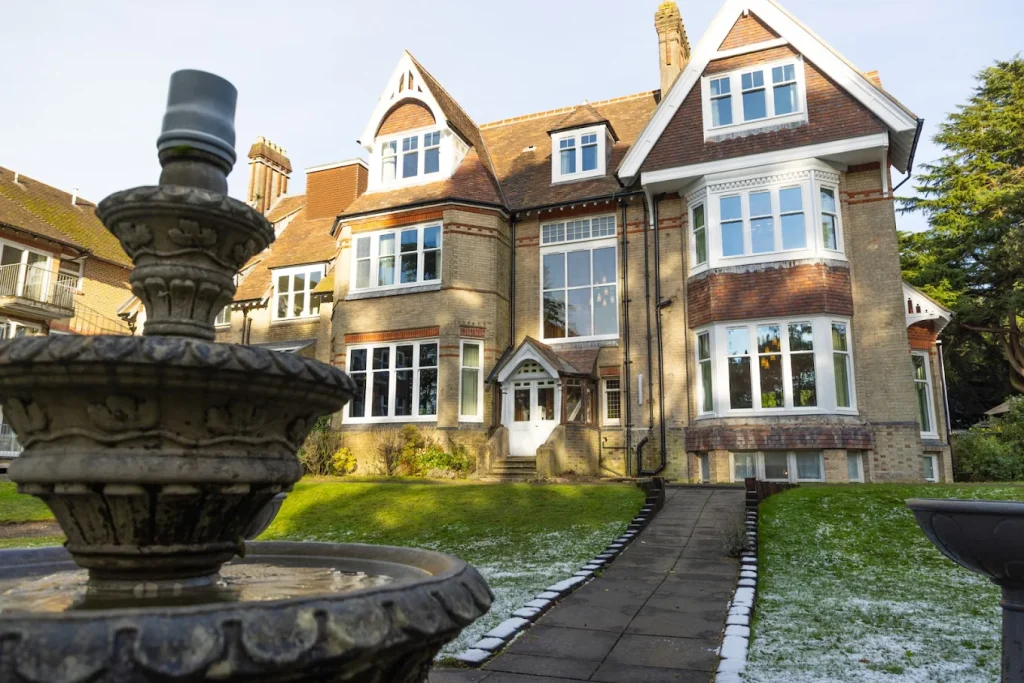
Historic EC Cleaners project imagery is used as care-home context only. It is not presented as a current Search and Submit Ltd contract or as a retrospective technical approval of the original work.
Care-home kitchen extraction and ventilation: frequently asked questions
How often should a care-home kitchen extract system be cleaned?
There is no single interval that is right for every care-home kitchen. Operating hours, cooking type, grease accumulation, system condition, previous inspection evidence and any relevant insurer or fire-risk requirement can all influence the maintenance regime.
Can kitchen extract work be carried out while the care home remains occupied?
Often yes, but the work needs to be planned around residents, meal service, staff routines, contractor routes, noisy or high-level activity, roof access and the home’s own safety and access controls.
Does CQC require a TR19 certificate?
CQC regulations in England create broader duties around safe care, suitable and properly maintained premises and equipment, and appropriate hygiene. They do not create a simple rule that every care home must hold a TR19 certificate.
What if the care-home kitchen extraction is not working properly?
Weak pull, smoke, excessive heat or fan problems should not automatically be treated as cleaning issues. Mechanical, control, replacement-air or other ventilation problems may need competent technical investigation.
What should a care group do if several homes use different contractors and report formats?
Use a central register that keeps each home, kitchen or ventilation system, contractor, due date, report, certificate, access issue and outstanding action separately identifiable.
What should come back after kitchen extract work?
The operator should be able to understand which system was covered, what was completed, what remained inaccessible or excluded and what further action is still required, together with the relevant contractor evidence.
Have an extraction or ventilation requirement at a care home or care group?
Send the home, kitchen or ventilation area, what has triggered action, the available working window and any existing report, quotation, photographs or professional recommendation. For a care group, include the number of homes and any common estate programme or deadline.
Responsibility statement:
EC Cleaners Network is operated by Search and Submit Ltd. This page provides general commercial and procurement information and is not care-regulatory, fire-safety, food-safety, safeguarding, insurance, building-services or technical advice. Search and Submit Ltd does not inspect, clean, test, survey, design, remediate, certify or technically approve kitchen extraction or ventilation systems and does not accredit or guarantee independent contractors. Independent appointed contractors and relevant competent professionals remain responsible for technical assessment, safe working, physical delivery, reporting, certification and professional conclusions within their appointed scope.
TR19® Grease and TR19® Air are BESA specifications. References are descriptive and no BESA endorsement of or affiliation with EC Cleaners Network is claimed.