
EC Cleaners Network · Multi-Site & Portfolio Compliance
Multi-site kitchen extract compliance works best when the management process is standardised but each property, kitchen and extraction system remains separately identifiable.
A portfolio can share procurement rules, evidence standards, contractor requirements and reporting structure. It should not assume that every site has the same duct route, access, grease loading, cleaning frequency, landlord arrangement or outstanding action.
How many sites and what has triggered the programme?
Send the property list, available reports, known due dates and the reason for the programme. This may be planned maintenance, an insurer or fire-risk requirement, inconsistent contractor evidence, a new portfolio acquisition or a need to bring several sites under one management process.
Search and Submit Ltd uses your details to respond and coordinate the enquiry, including sharing relevant information with appropriate independent specialists. Read our Privacy Policy. Please omit unrelated personal or sensitive information.
What should be standardised across a multi-site portfolio?
Central control is useful where it makes information easier to compare and actions easier to follow. Standardise the commercial brief, minimum evidence expectations, contractor assurance process, naming conventions, escalation rules and portfolio reporting.
Do not standardise away the facts that make one site different from another. Each kitchen still needs its own system identity, condition, access position, cleaning history, local operating pattern and outstanding actions.
Standardise the process. Keep the site truth local and traceable.
Build a site and system register first
Property identity
Use a clear site name, address and internal property reference so evidence is not attached to the wrong location.
Kitchen and system reference
Large premises may have several kitchens or extract systems. Keep each route separately identifiable.
Latest cleaning evidence
Record the latest attendance, report, certificate, photographs, measurements and any recommended next review point.
System scope
Identify canopy, plenum, ductwork, riser, fan, discharge and any other relevant system sections.
Access position
Record roof access, risers, access panels, high-level requirements and any known inaccessible ductwork.
Commercial requirements
Keep insurer, landlord, fire-risk, franchise, estates or other portfolio requirements with the relevant site.
Open actions
Repairs, additional access, repeat cleaning, mechanical faults and missing evidence should remain visible until resolved.
One portfolio does not mean one cleaning frequency
TR19® Grease is BESA’s specification for managing grease accumulation and associated fire risk in commercial kitchen extraction systems. BESA describes it as industry best practice for inspection, cleaning and fire-risk management.
The management framework can be common across all sites, but the actual maintenance regime should reflect the conditions at each kitchen. Cooking type, operating hours, grease accumulation, system condition, previous evidence and relevant insurer or other requirements can differ materially across the portfolio.
A national calendar is useful only if it still reflects the condition and use of each kitchen.
Use a common contractor brief, then add site-specific scope
A multi-site organisation can define common commercial requirements for contractor competence, reporting, photographs, certification, safe working and communication. The physical job still needs to be described site by site.
The contractor should know which extract system is included, what access is available, whether roof or landlord permissions are needed, what working hours apply and what evidence must be returned.
Keep access problems visible at portfolio level
Inaccessible ductwork is easy to lose inside a large programme. A contractor may complete the reachable sections, upload a certificate and move to the next site while the unresolved section disappears from the central view.
BESA’s current public guidance says adequate access is necessary for effective inspection and cleaning. Where access is missing, the portfolio register should retain that limitation as a separate action until it is resolved.
Completed attendance and completed system are not always the same thing.
Set one evidence standard across the portfolio
A central team should be able to open the record for any site and understand what was completed without relying on the memory of a local manager. The evidence package should clearly identify the site, system, contractor, date, work completed, measurements, photographs, exclusions and open actions.
BESA’s current public guidance describes post-clean verification including before-and-after photographs, DTT or WFTT measurements, a written summary of work, access limitations, cleaned-area information and a hygiene certificate.
Store evidence by site and system, not just by contractor or month
Portfolio records become difficult to use when reports are stored in one folder named after the contractor or the month of attendance. The evidence should be traceable back to the exact property and extraction system.
A practical structure is property, kitchen or system, attendance date, contractor, report, certificate, photographs and outstanding actions. That makes missing records and repeat issues easier to identify.
The purpose of central storage is retrieval and accountability, not simply accumulation.
Monitor exceptions, not just completion percentages
A dashboard showing that 95% of sites are complete can hide the five properties with the greatest unresolved risk. Central reporting should therefore distinguish routine completion from material exceptions.
Overdue site
The planned inspection, cleaning or review date has passed.
Missing evidence
The contractor attendance is recorded but the required report or certificate has not been received.
Inaccessible section
Part of the extract system could not be inspected or cleaned and still needs enabling work.
Repeat recommendation
The same access, fan, cleaning or repair action appears across successive reports.
Technical fault
Fan, control, airflow or another issue requires a different specialist route from hygiene cleaning.
External action
An insurer, fire-risk assessor, landlord or other party requires evidence or follow-up.
Contractor consistency matters, but so does site capability
BESA’s Vent Hygiene Register provides an approved-contractor route for ventilation hygiene work and says specifying approved contractors can support consistent standards, clear audit trails and portfolio-level outcomes.
A national contractor model can simplify administration, but not every contractor has the same regional coverage, access capability, working-hour flexibility or experience with complex sites. Contractor assurance should therefore consider both portfolio standards and site-specific capability.
Keep kitchen grease extraction separate from general ventilation
A multi-site estate may have both kitchen extract systems and general HVAC or ventilation hygiene requirements. These should not be merged simply because both involve ductwork.
TR19® Grease covers grease accumulation within commercial kitchen extraction systems. BESA’s updated TR19® Air specification covers cleanliness and hygiene management of general ventilation systems. Keeping the workstreams separate makes procurement, contractor competence and evidence clearer.
Historic project context
The physical work behind a multi-site programme still happens one extract system at a time. Each property has its own duct route, access position, contamination, fan arrangement and evidence package.
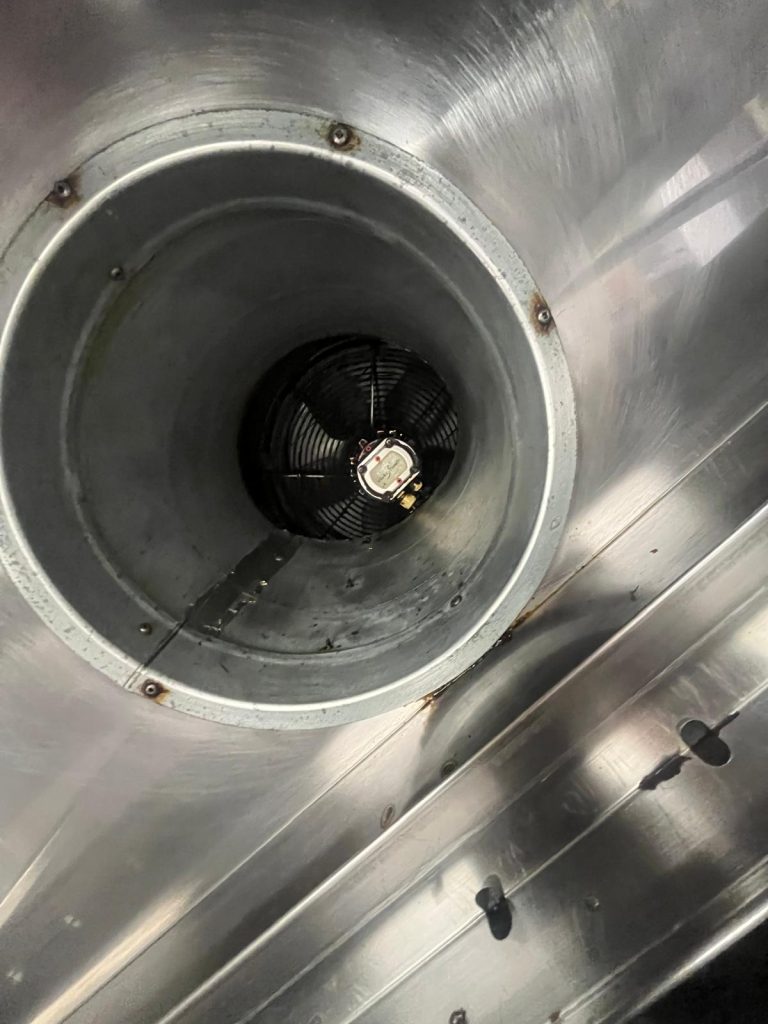
Historic EC Cleaners project imagery illustrates internal kitchen extract ductwork. It is not presented as evidence of the condition of any current portfolio or multi-site programme.
A practical multi-site management sequence
- Build the property and system register. Give every kitchen extract system a clear identity.
- Collect existing evidence. Reports, certificates, photographs, measurements, access notes and external requirements.
- Classify the current position. Due, overdue, evidence missing, access unresolved, technical fault or routine maintenance.
- Set the common contractor standard. Define competence, reporting, communication and evidence expectations.
- Add the site-specific scope. Preserve local system, access, working-hour and landlord differences.
- Schedule the work. Coordinate regions and dates without forcing every site into the same technical interval.
- Validate returned evidence. Check that each attendance produced the expected report and that exclusions remain visible.
- Track open actions. Keep access, repairs, missing evidence and repeat recommendations active until resolved.
- Report by exception. Give the central team visibility of the sites that need decisions rather than only the sites marked complete.
What EC can help organise across a portfolio
Site register
Property, kitchen, extract-system, current evidence and known requirement can be kept separately identifiable.
Contractor enquiries
Common commercial requirements can be combined with site-specific system and access information.
Evidence tracking
Reports, certificates, photographs, exclusions and outstanding actions can be organised by property and system.
Exception reporting
Overdue sites, missing evidence, inaccessible ductwork and unresolved actions can be kept visible for central follow-up.
EC does not technically approve individual systems, determine statutory compliance or replace the professional responsibilities of appointed contractors, fire-risk assessors, insurers, designers or other competent advisers.
Related multi-site kitchen extraction guidance
Multi-site kitchen extract compliance: frequently asked questions
How should a multi-site organisation manage kitchen extract compliance?
Use one portfolio process while keeping each site separately identifiable. Maintain a site and system register, cleaning and maintenance history, access notes, contractor scope, insurer or fire-risk requirements, completion evidence and outstanding actions for every location.
Should every site use the same cleaning frequency?
No. A common management method can be used across the portfolio, but the cleaning regime should reflect the conditions at each kitchen, including cooking type, operating hours, grease accumulation, system condition, previous evidence and any insurer or other relevant requirements.
Can one national specification be used for every site?
A standard commercial brief can help create consistency, but each property still needs site-specific system scope, access assumptions, exclusions, working arrangements and evidence requirements.
What information should be held for each kitchen extract system?
Keep the site identity, kitchen and system reference, latest cleaning and inspection evidence, cleaning frequency or next review point, fan and access information, known exclusions, landlord or insurer requirements, contractor details and any open remedial actions.
How should multi-site evidence be stored?
Keep evidence by site and system rather than as one undifferentiated portfolio file. Reports, certificates, photographs, measurements, exclusions and open actions should remain traceable to the exact property and extraction system.
Should the same contractor be used across every location?
Not necessarily. A national or regional contractor model can simplify administration, but contractor competence, geographic coverage, access capability, working hours and system requirements still need to match the individual sites.
What should a central facilities team monitor?
Monitor due and overdue sites, missing evidence, inaccessible ductwork, unresolved recommendations, repeat faults, insurer or fire-risk actions, contractor performance and whether each completed attendance has returned usable evidence.
Managing kitchen extraction across several sites?
Send the site list, available reports and what has triggered the programme. EC can help organise the property register, contractor requirements, site-specific scopes, returned evidence and unresolved actions so the portfolio is easier to manage without pretending every kitchen is the same.
Responsibility statement:
EC Cleaners Network is operated by Search and Submit Ltd. Search and Submit Ltd does not inspect, clean, test, survey, design, remediate, certify or technically approve kitchen extraction or ventilation systems. Independent appointed contractors and competent professionals remain responsible for technical assessment, safe working, quotations, physical delivery, reporting, certification and professional conclusions within their appointed scope.
TR19® Grease and TR19® Air are BESA specifications. References are descriptive and no BESA endorsement of or affiliation with EC Cleaners Network is claimed.