
EC Cleaners Network · Multi-Site Portfolio Control
A useful kitchen extract compliance register should show the current position of every property and every extract system without forcing several different risks into one generic status.
The register should tell a central team what system exists, when it was last attended, what evidence is available, what is due next, whether access is complete, who carried out the work and what remains unresolved.
Do you already have a site list, spreadsheet or contractor schedule?
Send the existing register, property list or sample reports if available. EC can help organise the information into clearer site, system, evidence, access and open-action fields without replacing the technical conclusions of the appointed contractors.
Search and Submit Ltd uses your details to respond and coordinate the enquiry, including sharing relevant information with appropriate independent specialists. Read our Privacy Policy. Please omit unrelated personal or sensitive information.
What is the purpose of the register?
The register should give the central team a reliable view of what is known and what still needs action. It should not become a storage list that says only whether a certificate exists.
A useful register connects the commercial programme to the physical system. It shows the property, the kitchen, the extract route, latest evidence, due dates, access limitations and outstanding recommendations in one traceable record.
The register should help somebody decide what needs attention next.
Core fields to include
Property
Site name, full address and internal property reference.
Kitchen or system ID
Use a separate identifier where the property has more than one kitchen or extraction system.
Sector or site type
Restaurant, school, care home, hotel, factory, healthcare, QSR or another operating category.
Latest attendance
Date of the latest inspection, clean, survey or related contractor visit.
Latest report
Record whether the full contractor report has been received and where it is stored.
Certificate status
Record whether the expected certificate is present and linked to the correct system and attendance.
Next review or cleaning point
Keep the next planned action visible without assuming every site follows one universal interval.
System scope
Identify canopy, plenum, ductwork, riser, fan, discharge and other relevant parts of the extract route.
Access status
Show whether the system is fully accessible, partly accessible or known to need enabling work.
Contractor
Record the appointed business and the relevant work category or capability.
External requirement
Record insurer, fire-risk, landlord, franchise or other specific requirements linked to the site.
Open action
Keep access, repair, cleaning, mechanical, evidence and other unresolved actions visible until closed.
Use one record per extract system where the site has several
A hotel, hospital, university, school campus or large restaurant may have several separate kitchens and extraction systems. These can have different cooking loads, contractors, cleaning histories, access problems and due dates.
Combining them into one property-level status can hide the system that is overdue or incomplete. Keep each kitchen extract route separately identifiable while allowing the portfolio dashboard to roll the information up to site level.
Do not use the certificate as the only completion field
BESA says the Vent Hygiene Register provides documented evidence of ventilation system cleans and supports auditable maintenance records. The certificate is valuable, but portfolio control should also show whether the full evidence package has been received.
For each completed attendance, the register should make it possible to see whether the report, photographs, measurements, access limitations and outstanding recommendations are available.
Certificate present and evidence complete are different fields.
Give access its own status
Access problems are one of the easiest issues to lose inside a large programme. A site can show a completed attendance while one or more sections of ductwork remain inaccessible.
The register should therefore separate general job status from access status. A simple portfolio field such as full access, partial access, access action required or access not yet verified is more useful than burying the issue inside a PDF report.
Separate due dates from technical cleaning frequency
A portfolio register needs dates so work can be planned, but one national date rule should not replace the site-specific basis for the maintenance regime.
TR19® Grease defines industry best practice for inspection, cleaning and risk management of kitchen extraction systems. The register should preserve the next planned review or clean for each system and, where useful, the reason behind that interval.
Record contractor status in a way that can be verified
Where Vent Hygiene Register status is relevant, BESA says clients should verify contractors on the official register because some businesses may claim registration or display the logo when they are not currently approved.
The register can record the appointed contractor and relevant category, but current approval status should be checked against the official source when the contractor is being appointed or reviewed.
Do not turn an old spreadsheet entry into permanent contractor approval.
Keep TR19 Grease and TR19 Air separately identifiable
A national facilities team may manage kitchen extraction and general ventilation within the same estate. Those workstreams can sit inside one portfolio system, but the register should clearly identify which specification and system type each record refers to.
BESA states that TR19® Grease covers grease accumulation in commercial kitchen extraction systems, while TR19® Air covers the internal cleanliness and hygiene management of general ventilation systems.
Add an evidence-status field rather than a simple complete box
A single complete or incomplete status is too blunt for portfolio work. Consider separating evidence into stages so missing documents are easy to identify.
Attendance confirmed
The contractor attended the correct site and system.
Report received
The full written report is available.
Certificate received
The expected certificate is present and matches the attendance.
Photographs received
Before-and-after or other relevant system photographs are available.
Measurements received
Relevant measurements or verification information are included where required.
Exclusions checked
Inaccessible or excluded sections have been reviewed rather than overlooked.
Open actions logged
Further access, cleaning, repair or technical actions remain visible.
Use open-action categories that support decision-making
A central team should be able to filter the register for the sites that need intervention. Consistent action categories make that possible.
- Overdue maintenance. The planned review or cleaning date has passed.
- Missing evidence. Attendance occurred but required records are incomplete.
- Access required. Part of the system remains inaccessible.
- Further cleaning. Additional cleaning or spot work has been recommended.
- Mechanical fault. Fan, motor, controls or another technical issue needs separate action.
- System review. Ventilation performance or system suitability needs competent assessment.
- External action. Insurer, fire-risk assessor, landlord or other stakeholder requires follow-up.
- Contractor query. Scope, evidence, capability or quotation needs clarification.
Historic project context
A portfolio register exists to control real physical systems. Each record should ultimately point back to an identifiable extract route with its own ductwork, access, fan, condition and evidence.
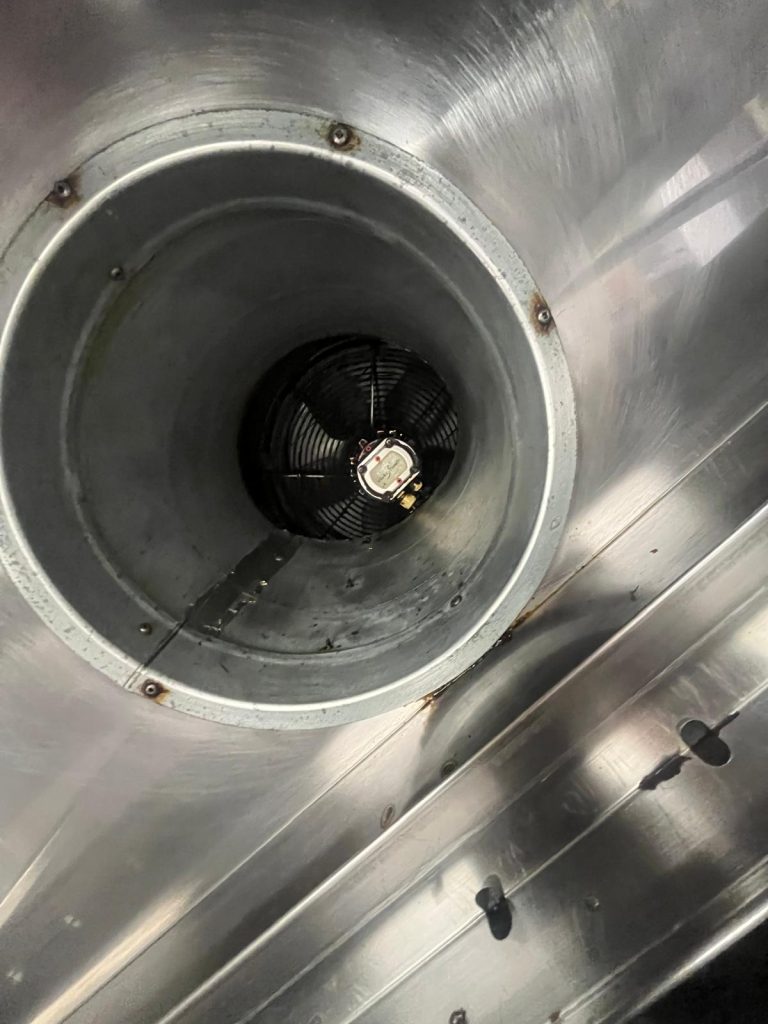
Historic EC Cleaners project imagery illustrates internal kitchen extract ductwork. It is not presented as evidence of the condition of any current multi-site estate.
A practical register structure
- Identify the property. Site name, address and internal reference.
- Identify the system. Kitchen or system reference and extract route.
- Record latest activity. Attendance date, contractor and work type.
- Record evidence status. Report, certificate, photographs and measurements.
- Record access status. Full, partial, action required or unknown.
- Record next planned date. Keep the system-specific review or cleaning point visible.
- Record external requirements. Insurer, landlord, fire-risk or other portfolio obligations.
- Record open actions. Keep unresolved technical or evidence issues active.
- Assign ownership. Make clear who is following each action internally or externally.
What EC can help organise
Existing register review
Current spreadsheets or site lists can be reorganised around property, system, evidence and action status.
Evidence matching
Reports and certificates can be associated with the correct site and extraction system.
Contractor information
Contractor details, work type and portfolio requirements can be kept consistently without replacing official verification.
Exception visibility
Overdue sites, missing evidence, access issues and repeat recommendations can be surfaced for follow-up.
EC does not technically approve systems, determine statutory compliance or replace the technical responsibilities of appointed contractors and competent professionals.
Multi-site compliance registers: frequently asked questions
What should a multi-site kitchen extract compliance register include?
At minimum, include the property, kitchen or system reference, latest report and certificate date, cleaning or review due date, system scope, access status, contractor information, evidence status, insurer or fire-risk requirements and open remedial actions.
Should each site have one row or can several systems be grouped together?
Use one identifiable record for each kitchen extract system where several systems exist at the same property. Grouping several different systems into one line can hide different due dates, access problems or outstanding actions.
Should the register include certificates only?
No. A certificate is only one part of the evidence. The register should also show whether the full report, photographs, measurements, access limitations and outstanding actions have been received.
How should inaccessible ductwork be shown on the register?
Give access status its own field and keep unresolved areas open until the enabling work or further inspection has been completed. Do not mark the system fully complete if important sections remain inaccessible.
How should contractors be recorded?
Record the appointed contractor, relevant capability or registration information, attendance date and evidence returned. Where Vent Hygiene Register status is relevant, verify current status directly on the official register.
Should TR19 Grease and TR19 Air be kept in the same register?
They can sit within the same portfolio control system, but the work types should remain separately identified because kitchen grease extraction and general ventilation hygiene are different technical disciplines and specifications.
What should central teams review most often?
Prioritise overdue systems, missing reports, inaccessible ductwork, repeated recommendations, unresolved technical faults and external actions from insurers, fire-risk assessors, landlords or other stakeholders.
Building or improving a multi-site kitchen extract compliance register?
Send the existing site list, spreadsheet or sample reports. EC can help organise the portfolio information into clearer system, evidence, access, contractor and open-action fields so the central team can see where decisions are needed.
Responsibility statement:
EC Cleaners Network is operated by Search and Submit Ltd. Search and Submit Ltd does not inspect, clean, test, survey, design, remediate, certify or technically approve kitchen extraction or ventilation systems. Independent appointed contractors and competent professionals remain responsible for technical assessment, safe working, quotations, physical delivery, reporting, certification and professional conclusions within their appointed scope.
TR19® Grease and TR19® Air are BESA specifications. References are descriptive and no BESA endorsement of or affiliation with EC Cleaners Network is claimed.