
EC Cleaners Network · From Requirement to Evidence
TR19® Grease · Fire safety · Enforcement · Remediation
TR19 Non-Compliance, Fire Safety Enforcement & Legal Risk
Has a fire-risk assessment, insurer, landlord, enforcing authority or previous extraction report identified a commercial kitchen issue that still needs action?
TR19® Grease is an industry specification rather than legislation. There is therefore no standalone criminal offence or fixed statutory fine called “TR19 non-compliance”. The important issue is the underlying risk or failure: grease accumulation, inadequate maintenance, inaccessible ductwork, incomplete evidence or another condition that may need to be addressed within the wider fire-safety, insurance or premises-management framework.
Start with what actually triggered action. An enforcement notice, fire-risk recommendation, insurer instruction and contractor report may all require physical work — but they do not carry the same authority or mean the same thing.

Identify the actual problem
“Failed TR19” is not specific enough to tell anybody what needs to happen next.
Before commissioning another cleaning visit, establish what has actually been identified and who identified it. A grease condition, access limitation, fire-risk action and documentation failure can each require a different response.
Grease accumulation has been identified
Combustible deposits within a commercial kitchen extract system can become part of the premises fire-risk picture and may require specialist cleaning or further assessment.
Part of the ductwork remains inaccessible
The canopy and accessible sections may have been cleaned while concealed ductwork, a riser, fan or other downstream section remains uninspected or untreated.
A fire-risk assessment contains an action
The original recommendation should remain attached to the physical requirement so the organisation can demonstrate what was subsequently commissioned and completed.
The existing report does not prove the scope
A certificate may exist while system identity, photographs, inaccessible sections or outstanding recommendations remain unclear.
Law · standard · insurance · contract
Where does the requirement actually come from?
TR19® Grease can provide an important technical framework for managing grease accumulation. It should not be confused with legislation, an insurance contract, a fire-risk assessment or a statutory enforcement notice.
TR19® Grease
BESA’s specialist specification concerned with grease accumulation and associated fire-risk management within commercial kitchen extraction systems.
Fire-safety legislation
Statutory duties around assessing and managing fire risk arise from applicable fire-safety legislation rather than from TR19® itself.
Fire-risk assessment
The premises fire-risk assessment considers the wider fire-risk picture and may identify grease accumulation, inadequate maintenance or another extraction-related concern.
Insurance requirement
An insurer, broker or risk engineer may specify maintenance, cleaning, contractor or evidence requirements through policy wording, endorsements or risk-improvement actions.
Landlord or estate requirement
Lease, licence, landlord or property-management arrangements can create contractual maintenance obligations alongside statutory fire-safety responsibilities.
Contractor report
A specialist contractor can identify cleaning, access or maintenance concerns within its scope, but its report does not itself become a statutory enforcement notice.
Statutory fire-safety enforcement
Formal enforcement comes from the relevant enforcing authority — not from TR19®.
In England and Wales, the Regulatory Reform (Fire Safety) Order 2005 provides the principal fire-safety framework for most non-domestic premises. Scotland and Northern Ireland operate separate regimes. Where statutory requirements are not being met, the relevant enforcing authority has its own powers and procedures.
Inspection
The enforcing authority can inspect relevant premises and consider whether applicable statutory fire-safety duties are being met.
Enforcement notice
A formal notice can require specified fire-safety deficiencies to be addressed within a defined period.
Prohibition notice
Use of premises, or part of premises, can be restricted where the statutory threshold for serious risk is met.
Prosecution
Serious breaches of applicable fire-safety legislation can lead to criminal proceedings and penalties determined under the relevant law.
Real extraction environments
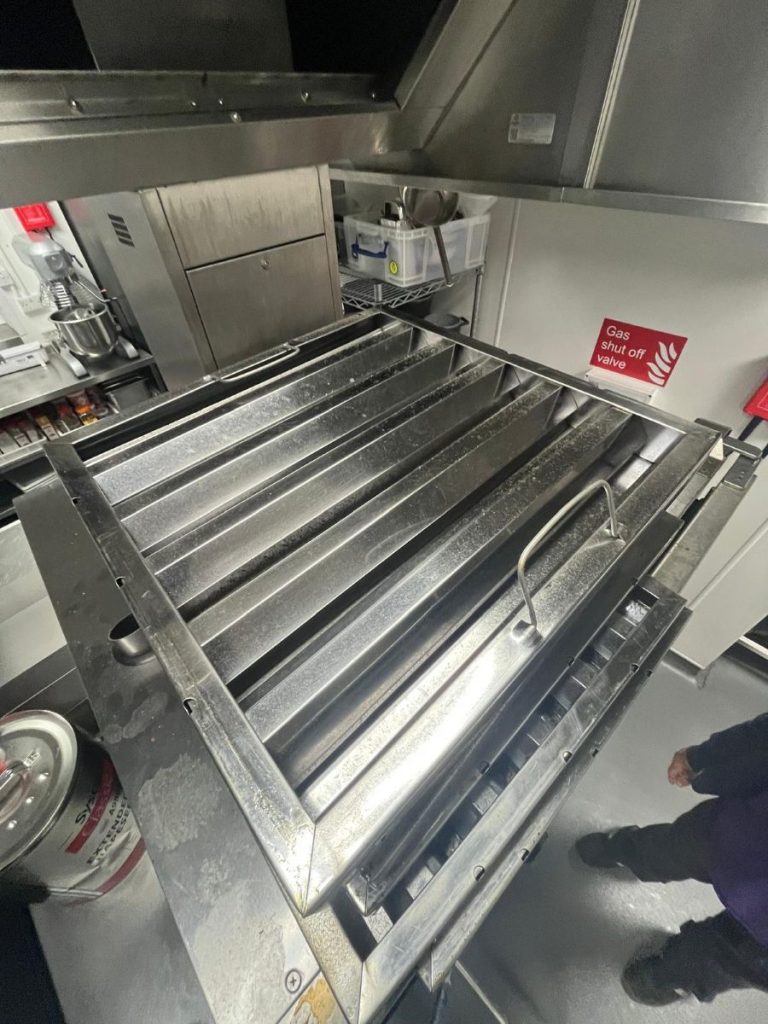
The fire-risk question often extends far beyond what can be seen from the cooking line.
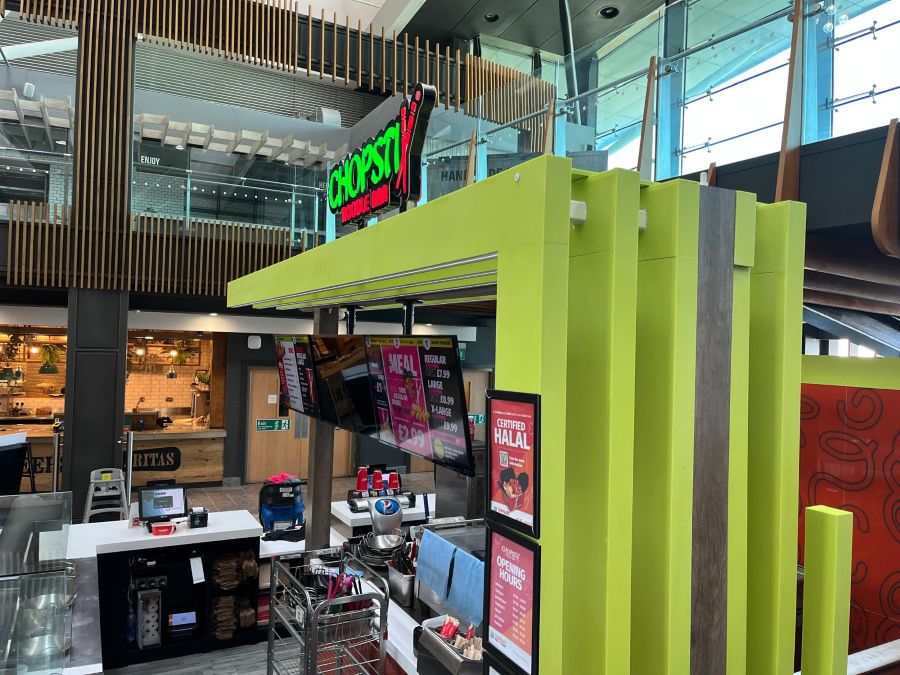
These historic EC Cleaners archive images illustrate different commercial circumstances around kitchen extraction. They are not presented as enforcement cases, prosecutions or retrospective findings that any of the premises shown breached fire-safety legislation.

Restaurant mobilisation
Pho · Bournemouth
Restaurant openings and refits bring together kitchen equipment, extraction, contractors and handover deadlines. Future maintenance responsibility needs to be clear from the point the operation begins.
High-level extraction
Access beyond the kitchen
Extract systems can continue through ceilings, risers, roofs and other areas that are substantially harder to reach than the kitchen canopy.
TR19 fines explained
There is no universal statutory fine for being “non-compliant with TR19”.
TR19® Grease may be relevant evidence within fire-risk management, but legal sanctions arise from breaches of applicable law.
Claims that a commercial kitchen automatically receives a £5,000, £30,000 or £50,000 fine for “failing TR19” confuse an industry specification with statutory enforcement. Where prosecution occurs, the relevant authority and court deal with the particular legislation, alleged offence and facts of the case.
TR19® Grease
Provides an industry framework for managing grease-related fire risk within commercial kitchen extraction.
Legislation
Creates the relevant statutory duties and offences.
Enforcing authority
Exercises the statutory enforcement powers available within the applicable regime.
Court
Determines penalties where a statutory offence is successfully prosecuted.
Contractor evidence
Records physical work and can support the organisation demonstrating how an identified extraction issue was addressed.
From finding to remedial scope
Turn the original finding into a specific physical instruction.
The next contractor should be able to see why action is required, which extraction system is involved and what physical problem needs attention.
Keep the original trigger
Fire-risk assessment, statutory notice, insurer instruction, landlord action or previous contractor recommendation.
Identify the system
Kitchen, canopy, plenum, ductwork, riser, fan and discharge route where known.
Identify the problem
Grease accumulation, inaccessible ductwork, incomplete work, missing evidence or another defined deficiency.
Define the physical response
Cleaning, inspection, access remediation, repair or another specialist requirement.
Agree the close-out evidence
Photographs, report, measurements where applicable, certification and clearly recorded outstanding actions.
Who decides the issue is closed?
Physical completion and professional close-out are not necessarily the same decision.
A specialist contractor can record what it physically inspected, cleaned or remediated. Whether that evidence satisfies the original regulatory, professional, insurance or contractual action belongs with the party responsible for that original decision.
Cleaning contractor
Owns its physical work, safe working, report and technical statements within the appointed scope.
Fire-risk assessor
Retains responsibility for professional fire-risk conclusions within its appointment.
Insurer or broker
Determines insurance requirements and whether further evidence is required for its own purposes.
Landlord or property team
Determines relevant property, lease or estate requirements within its role.
Enforcing authority
Determines its own statutory enforcement position and does not delegate that determination to the cleaning contractor.
Different premises · different responsibility structures
The dutyholder and contractual picture changes from one property to another.
An independent restaurant, managed shopping-centre unit, school, care home, hotel, healthcare estate or multi-site business can have different combinations of operator, employer, landlord, facilities manager and professional advisers.
Fire-risk, enforcement or inspection requirement
Already have a report, notice or recommendation that requires physical action?
Send the original document and any existing extraction evidence. EC can help organise the commercial requirement for appropriate independent specialist delivery without replacing the fire-risk assessor, insurer, enforcing authority, engineer or other competent professional responsible for the underlying decision.
Site
Premises address, organisation, sector and affected kitchen or extraction system.
Trigger
Fire-risk assessment, enforcement action, insurer request, landlord requirement or previous contractor report.
Exact wording
Include the relevant notice, recommendation, report extract or insurance instruction wherever possible.
Known problem
Grease accumulation, inaccessible ductwork, partial cleaning, damaged access or another recorded issue.
Existing evidence
Previous TR19® reports, photographs, certificates, quotations or technical recommendations.
Deadline
Any statutory, insurer, inspection, reopening or operational deadline already attached to the requirement.
Network operator
Search and Submit Ltd
Telephone
Role
Commercial requirement organisation · not legal, fire-risk or regulatory advice
UK coverage
Subject to requirement, geography and independent specialist availability
EC Cleaners Network is operated by Search and Submit Ltd. Search and Submit Ltd does not provide legal advice, undertake fire-risk assessments, issue or interpret statutory enforcement notices, exercise enforcement powers or determine whether statutory, insurance or contractual obligations have been satisfied.
Search and Submit Ltd does not inspect, clean, test, survey, design, remediate, certify or technically approve commercial kitchen extraction systems. Independent appointed contractors and competent professionals remain responsible for technical assessment, quotations, safe working, physical delivery, reporting, certification and professional conclusions within their appointed scope.
TR19® Grease is a BESA industry specification concerned with grease-related fire-risk management within commercial kitchen extraction systems. It is not primary legislation and there is no universal statutory fine called a “TR19 penalty”. Fire-safety legislation and enforcement arrangements differ across UK jurisdictions.