
High-Level Cleaning at Chopstix, West Quay Southampton
A high-level cleaning project around a busy QSR unit inside West Quay, where difficult-to-reach signage and fascia had to be cleaned within a major managed shopping-centre environment.
The Chopstix project is a useful example of specialist cleaning outside the normal kitchen floor area. Grease, dust and atmospheric residue had accumulated on elevated customer-facing surfaces around the unit, creating a requirement for safe access, controlled working and a clean hand-back without treating the job as routine low-level cleaning.
If your requirement involves high-level signage, fascia, canopy exteriors, ledges or other difficult-access surfaces, send photographs, site rules and access information with the enquiry. The height and building environment can matter as much as the cleaning itself.

A specialist access problem inside a live retail and food-service environment.
The surviving project record describes high-level cleaning to signage and fascia around the Chopstix unit at West Quay. The commercial challenge was not simply removing residue; it was reaching elevated surfaces safely while working within a public, landlord-controlled environment.
QSR environment
Chopstix operates within the West Quay retail and dining environment in Southampton, with customer-facing areas directly exposed to heavy public footfall.
High-level surfaces
The project record identifies signage, fascia and other elevated surfaces that could not be treated as ordinary reachable cleaning.
Grease, dust & atmospheric residue
The archive records visible build-up associated with the food-service environment and the wider shopping-centre setting.
Managed-building controls
Safe access, work-zone control and coordination with the surrounding public environment formed part of the practical requirement.

High-level cleaning becomes a building-access job as well as a cleaning job.
The photographs show the unit positioned within a multi-level food-court environment with glazing, balustrades, structural features and public circulation around it. That changes how a contractor needs to think about access, exclusion zones, equipment and the timing of the work.
Elevated signage
Brand signage above the normal working zone required safe high-level access rather than routine reach cleaning.
Fascia & architectural surfaces
Horizontal and vertical surfaces around the unit can collect grease, dust and airborne residue while remaining awkward to reach from floor level.
Public circulation
Work in a shopping-centre food court has to consider customers, neighbouring operators and shared access routes around the unit.
Landlord / centre controls
Access equipment, work timing, permits, isolation areas and contractor routes may need to align with the managed-building rules as well as the operator’s own requirements.
The work centred on high-level presentation cleaning, not a generic “TR19 clean”.
The project page records high-level cleaning of external-facing signage and fascia, including degreasing, dust and residue removal and controlled access to elevated areas. Those are credible project facts in their own right and do not need to be overstated as internal kitchen-extract or ventilation work.
The images show why this was an access-led cleaning requirement.
The West Quay photographs are especially useful because they show the unit in context: height, surrounding structures, public space and the branded surfaces that needed to be reached.

Brand fascia
Customer-facing presentation
The signage and fascia sit above the normal service area and remain highly visible to customers throughout the food court.

Managed food court
The wider building matters
The unit sits inside a large multi-level retail environment with shared circulation, neighbouring operators and substantial public space.
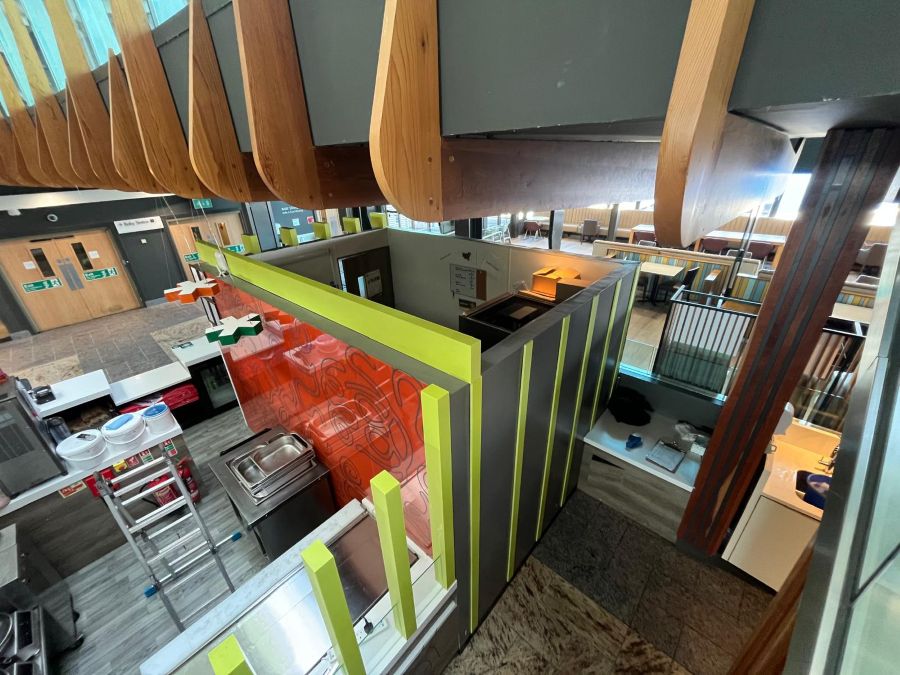
Difficult access
Surfaces beyond normal reach
Overhead architectural elements and fascia around the unit demonstrate why access planning can dominate this type of cleaning requirement.
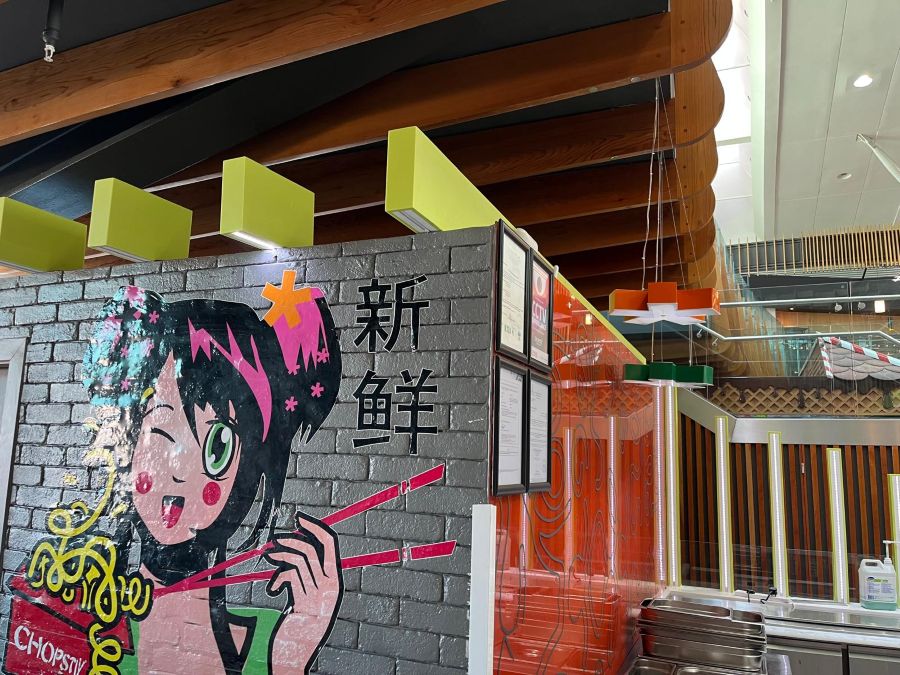
Detailed presentation
Brand surfaces at close range
The archive shows decorative and branded surfaces immediately around the food-service unit rather than a purely technical plant environment.
Safe access and minimal disruption were central to the requirement.
In a major shopping centre, a small cleaning area can still create a complicated contractor task if it sits above customers, adjacent operators or shared circulation routes.
The Chopstix project demonstrates why high-level QSR cleaning should be scoped around the real environment: the surfaces, their height, the access method, the building rules and the point at which the unit needs to be handed back for normal operation.
What should the operator or FM team have ready?
High-level cleaning enquiries become much easier to assess when the contractor can see the surface, the contamination and the access environment before the site visit.
It shows a capability that sits outside routine kitchen cleaning.
For national food brands and FM providers, difficult-access presentation cleaning can appear across shopping centres, transport hubs, retail parks and mixed-use buildings. The cleaning itself may be straightforward; the access and building interface are often what make the job specialist.
Send photographs of the surfaces and the surrounding access environment.
EC Cleaners Network can help organise the commercial requirement, keep access and managed-building constraints visible and approach potentially appropriate independent contractor capability. You do not need to know the access method before contacting us.
This case study is based on the surviving EC Cleaners project record and photographs. It records high-level cleaning to signage, fascia and difficult-access surfaces at Chopstix, West Quay Southampton. It should not be treated as evidence that internal kitchen-extract ductwork, ventilation systems or other TR19® work was undertaken unless supported by separate specialist project records. EC Cleaners Network is operated by Search and Submit Ltd. Search and Submit Ltd does not itself undertake cleaning, technical inspection or certification. Independent appointed contractors remain responsible for access assessment, RAMS, safe working, cleaning methods, physical delivery and reporting within their appointed scope.