
EC Cleaners Network · From Requirement to Evidence
Food hygiene ratings · Environmental Health · Remedial actions
Food Hygiene Ratings & Environmental Health Inspections
Has a food-hygiene inspection identified physical problems with the kitchen, premises, equipment, ventilation or cleaning that now need action?
A food-hygiene rating is based on much more than whether surfaces look clean on inspection day. Food-safety officers consider hygienic food handling, the physical condition of the premises and facilities, and how effectively the business manages food safety. Where an inspection identifies physical defects or cleaning requirements, those actions need to be translated into clear remedial work without confusing the contractor’s role with the regulator’s.
A low food-hygiene rating does not automatically mean “the kitchen needs a deep clean”. The problem may sit in food handling, premises condition, food-safety management – or a combination of all three.

Why businesses need action
The rating is the outcome. The useful information is the finding underneath it.
When a business receives an inspection report or lower-than-expected rating, the priority should be to understand exactly what the food-safety officer identified and which actions belong to operations, management, repair, cleaning or another specialist discipline.
The premises or equipment condition needs improvement
Damaged surfaces, difficult-to-clean areas, poor maintenance, defective equipment or inadequate facilities can affect the physical-condition element of an inspection.
Cleaning standards are not being maintained
Visible contamination, grease, food debris, inaccessible deposits or ineffective cleaning procedures may create immediate physical actions and wider questions about the routine cleaning regime.
Food-safety management is not convincing the inspector
Missing or ineffective procedures, weak monitoring, poor staff understanding or inadequate records can affect the management element even where the kitchen appears visually clean.
The business wants the improvements reassessed
Once the identified problems have genuinely been addressed, the next step may involve a re-rating or reinspection request under the applicable scheme rather than simply producing a contractor invoice.

What the inspection considers
Food hygiene ratings look at three connected areas.
In England, Wales and Northern Ireland, the Food Hygiene Rating Scheme is based on standards found during inspection across hygienic food handling, the condition of the premises and facilities, and the management of food safety.
Hygienic food handling
This concerns the way food is prepared, cooked, reheated, cooled, stored and otherwise handled. Cross-contamination, temperature control and day-to-day kitchen practice can therefore materially affect the inspection outcome.
Premises & facilities
The inspector considers the cleanliness and physical condition of the building and facilities, including matters such as layout, surfaces, ventilation, hand-washing facilities and pest-control arrangements.
Food-safety management
The business needs effective systems and checks to keep food safe, staff who understand the relevant controls, and evidence that the required standards are likely to be maintained after the inspector leaves.
Cleaning standards
Cleaning can affect the physical condition of the premises and demonstrate whether day-to-day hygiene controls are working. Specialist deep cleaning may solve an identified physical problem but does not replace the ongoing cleaning regime.
Ventilation
Ventilation forms part of the physical premises environment. Condensation, fumes, excessive heat or ineffective extraction may therefore contribute to premises concerns, although the underlying problem can require ventilation engineering rather than cleaning alone.
Kitchen extraction
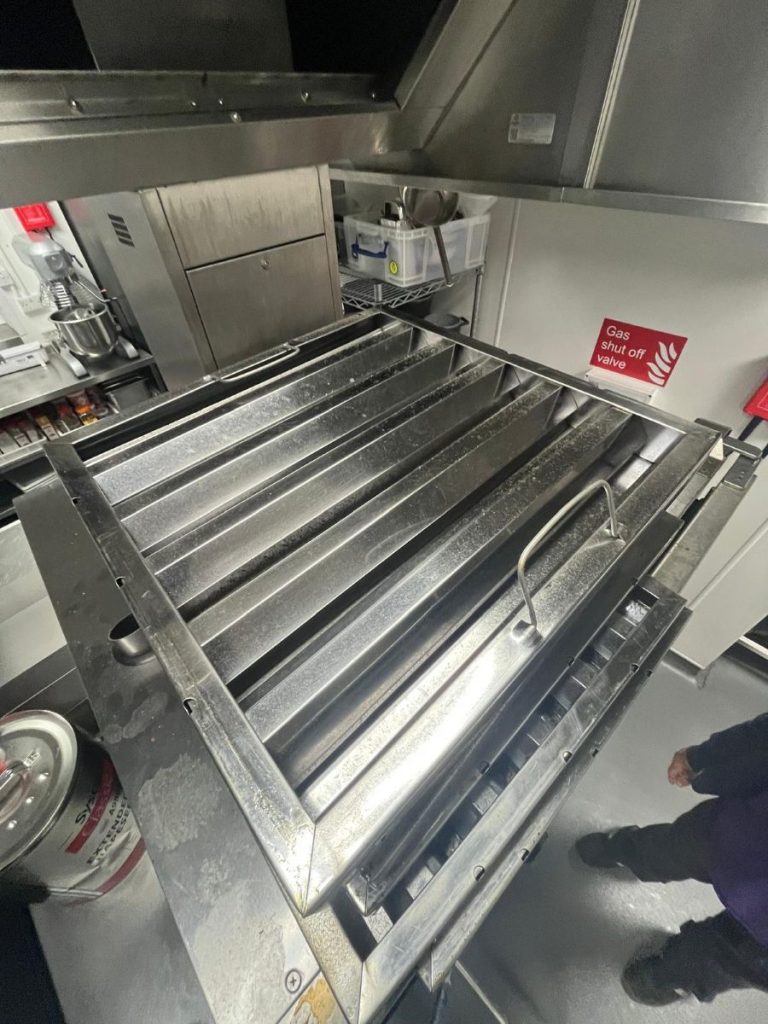
Grease extraction may need separate specialist maintenance or cleaning, particularly where contamination, access or fire risk has been identified. A TR19® report is not itself the business’s food-hygiene rating.
Understanding the rating
England, Wales and Northern Ireland use FHRS. Scotland uses a different scheme.
Under FHRS, food businesses are rated from 5 to 0 according to standards found at inspection. Scotland instead operates the Food Hygiene Information Scheme, using inspection outcomes including Pass and Improvement Required. The systems have similar public-information aims but should not be described as identical.
5 · Very good
The highest FHRS rating reflects very good food-hygiene standards found at the time of inspection.
3 · Generally satisfactory
The business meets a broadly satisfactory level, although there may still be areas where standards can be improved.
0–2 · Improvement needed
These ratings indicate increasing levels of improvement required, with a rating of 0 meaning urgent improvement is necessary.
Scotland
FHIS uses different outcomes, including Pass and Improvement Required, rather than the 0-to-5 FHRS scale.
After a disappointing inspection
Do not respond to the number alone. Respond to the inspection findings.
A lower rating can arise from different combinations of food handling, structural condition and management confidence.
The remedial plan should therefore separate operational corrections from physical work. That makes it possible to appoint the right contractor where necessary without asking a cleaning company to solve HACCP, staff training or regulatory-management problems outside its scope.
Food-handling issue
Review the relevant process, staff practice, temperature control, storage, separation or other operational food-safety control.
Management issue
Review procedures, records, monitoring, corrective action, staff understanding and whether the food-safety system is functioning in practice.
Cleaning issue
Define the contaminated surfaces, equipment or high-level areas and establish whether routine cleaning or specialist remediation is required.
Structural issue
Damaged surfaces, defective equipment, drainage, pest entry points or other premises defects may require repair rather than repeated cleaning.
Ventilation issue
Condensation, heat, fumes, poor capture or defective extract plant may need technical ventilation or maintenance assessment.
Different inspection environments
Environmental Health inspections apply across very different food operations.
These historic EC Cleaners environments illustrate the physical circumstances in which hygiene and remedial work can arise. They are not presented as examples of poor inspection ratings, enforcement action or criticism of the historic businesses shown.
Care & institutional catering
Occupied kitchens
Care and institutional kitchens have to maintain food-safety standards while continuing to provide essential meal services to people who depend on them.

Refit & reopening
Kokoro · Southampton
A restaurant refurbishment illustrates how construction residue, kitchen condition and reopening pressures can create a need for clearly defined physical cleaning before normal trading resumes.

Production & manufacturing
Food-production environments
Larger premises can contain high-level structures, machinery, ventilation and difficult areas that extend well beyond the normal visual inspection of food-contact surfaces.

Hotels & hospitality
Multi-service kitchens
Hotels and larger hospitality operations can combine breakfast, restaurant, banqueting, bar and staff catering within the same property.
After improvements
Physical work should leave evidence that can support the next inspection conversation.
If a food-safety officer identified physical shortcomings, contractor evidence can help demonstrate what has subsequently been done. The local authority remains responsible for regulatory assessment and any new rating.
Original inspection finding
Keep the relevant report, letter or action so the remedial work can be compared with the problem actually identified.
Physical scope
Record which surfaces, equipment, rooms, ventilation components or other areas were included in the remedial work.
Photographs
Use identifiable before-and-after context where photographs form part of the evidence.
Repairs & maintenance
Keep records of physical defects corrected by builders, engineers, pest-control specialists or other contractors.
Remaining actions
Do not describe the inspection action as complete if another identified matter is still unresolved.
FHRS business safeguards
A business has formal routes available after a rating is issued.
The Food Hygiene Rating Scheme includes safeguards intended to make the process fair. These are regulatory routes between the food business and its local authority, not services provided by EC Cleaners Network.
Appeal
A business can challenge a rating it believes is unfair or incorrect through the applicable local-authority process.
Right to reply
The business can explain actions taken since inspection or relevant circumstances affecting the standards found at the time.
Re-rating inspection
After required improvements have been made, a business can request reassessment under the applicable FHRS procedure.
Physical evidence
Contractor photographs, reports, repair records and other close-out material can help show what physical actions have been completed.
Regulatory decision
The food-safety officer and local authority remain responsible for inspection conclusions and any revised rating.
Physical remediation
The contractor closes the physical job – not the Environmental Health inspection.
That distinction protects both the food business and the contractor.
A specialist cleaning or remedial contractor should state what was physically completed, what could not be completed and what remains outside its competence. The local authority or food-safety professional can then assess that evidence within its own role.
Cleaning contractor
Defines and completes the physical cleaning work accepted within its scope.
Building contractor
Addresses surfaces, finishes, structural defects or other building-condition work within its competence.
Ventilation specialist
Investigates airflow, extraction performance, condensation or design-related ventilation concerns.
Food-safety team
Reviews procedures, HACCP controls, monitoring, staff practice and wider food-safety management.
Local authority
Retains responsibility for official food-hygiene inspection, enforcement decisions and the applicable rating outcome.
Food businesses & catering operations
Environmental Health inspections happen across far more than restaurants.
Food-hygiene inspection can apply across hospitality, care, education, healthcare, retail and other food businesses. The inspection principles are shared, but the physical remediation window can be very different from one sector to another.
Inspection remediation enquiry
Already have an Environmental Health inspection finding that needs physical work?
Send the inspection report, relevant findings, photographs and deadline. EC does not provide Environmental Health inspections or determine food-hygiene ratings, but we can help organise an identified cleaning, extraction, maintenance, access or physical remedial requirement for independent specialist delivery.
Site
Business name, premises address, sector and number of locations involved.
Inspection
Date of inspection, current rating or outcome and the local-authority finding that has created the action.
Physical issue
Cleaning, premises condition, high-level contamination, ventilation, extraction, maintenance or other defined remedial work.
Existing evidence
Inspection report, photographs, previous contractor records, repair quotations or food-safety recommendations.
Operational constraints
Trading hours, food removal, production, meal service, residents, pupils, patients or reopening requirements.
Deadline
Reinspection, re-rating request, reopening, audit, internal review or another required completion date.
Network operator
Search and Submit Ltd
Telephone
Role
Physical-remediation requirement organisation · not Environmental Health inspection
UK coverage
Subject to requirement, geography and independent specialist availability
EC Cleaners Network is operated by Search and Submit Ltd. Search and Submit Ltd does not act as an Environmental Health Officer, local authority food-safety officer, food-hygiene regulator or food-safety consultant and does not award, alter, appeal or guarantee Food Hygiene Rating Scheme or Food Hygiene Information Scheme outcomes.
Where an inspection, audit or competent food-safety review has already identified physical cleaning, repair, maintenance, extraction, access or other remedial work, EC can help organise the commercial requirement for independent specialist delivery. Independent appointed contractors remain responsible for the physical work, reporting and evidence within their appointed scope.
This page provides general commercial and procurement information rather than food-safety, regulatory or legal advice. Inspection, enforcement, appeals, re-rating and hygiene-rating decisions remain matters for the relevant food business, local authority and competent regulatory professionals.