
EC Cleaners Network · Kitchen Extract Problems
A commercial kitchen extract fan that keeps cutting out or stopping needs fault investigation, not repeated restarting or a cleaning instruction by assumption.
Intermittent operation can involve the fan, motor, controls, electrical supply, overload protection, ventilation interlocks, contamination or another system fault. Where gas appliances are interlocked with the mechanical ventilation, fan failure may also shut down the gas supply as a safety measure.
What happens when the extract fan stops?
Send the site location, how often the fault occurs, what happens immediately before and after the fan stops, and whether gas appliances or other controls shut down at the same time. Include recent cleaning, mechanical, electrical or ventilation records where available.
Search and Submit Ltd uses your details to respond and coordinate the enquiry, including sharing relevant information with appropriate independent specialists. Read our Privacy Policy. Please omit unrelated personal or sensitive information.
Why might a commercial kitchen extract fan keep cutting out?
An intermittent fan fault can have several possible causes. The fan motor, electrical supply, control system, safety interlock, overload protection, mechanical condition or wider ventilation system may be involved.
HSE guidance says the mechanical ventilation system in a commercial kitchen needs to work effectively. Where it is linked to gas appliances, the interlock is intended to prevent those appliances operating when adequate ventilation is not available.
A fan that repeatedly stops is a fault to investigate, not a normal operating condition to work around.
Read the parent guide to commercial kitchen extraction problems →
Possible reasons the fan may stop intermittently
Fan or motor fault
The fan motor or another mechanical component may be failing or operating unreliably. Competent diagnosis is needed to establish the fault.
Electrical supply or control issue
Contactors, controls, switches, variable speed drives, sensors or the electrical supply can affect whether the fan starts and remains running.
Overload or protective shutdown
Some equipment may stop when protection operates. Repeated resetting without establishing why the protection is activating can hide the underlying problem.
Ventilation interlock
Where gas appliances are interlocked with mechanical ventilation, the control system may shut down the gas supply if adequate ventilation is not proven.
Contamination around the fan
Grease build-up can affect fan condition and ventilation performance. Cleaning may be relevant, but contamination should not be assumed to explain every intermittent fault.
Heat or operating conditions
A fault that appears only during busy service, at a particular fan speed or after prolonged operation may provide useful evidence for the investigating contractor.
Recent work or system changes
Electrical work, control changes, fan replacement, cleaning, new cooking equipment or ventilation alterations may be relevant if the fault started afterwards.
Why does the gas supply sometimes shut off when the fan stops?
HSE’s gas safety guidance explains that the purpose of interlocking mechanical ventilation and gas supplies is to prevent gas-fired catering appliances operating when the ventilation system has failed or is not working correctly.
In relevant installations, failure of the mechanical ventilation should cause the gas supply to the appliances to be shut off. HSE also states that manual bypasses to such interlock systems are not permitted.
If the gas shuts off when the extract fan fails, do not bypass the interlock to keep the kitchen operating. The fault needs competent investigation.
Could cleaning fix a fan that keeps stopping?
Cleaning may be relevant where grease contamination is affecting fan components or restricting the extract route. HSE says planned maintenance and cleaning can help prevent nuisance shutdown caused by ventilation system failure.
That does not mean cleaning is the correct diagnosis for every fan that cuts out. Electrical faults, controls, bearings, motors, drives, interlocks and other mechanical problems need competent assessment within the appropriate technical scope.
What if the fan starts again after it cools down or is reset?
A fan that restarts later is still showing an intermittent fault. The timing of the shutdown can be useful evidence, but it should not be used to guess the cause remotely.
Record how long the fan had been running, the cooking load at the time, fan speed, any warning lights or control messages, and what action was needed before it restarted. This can help the competent contractor distinguish between mechanical, electrical, control and operating-condition issues.
What if the fan failure is accompanied by other symptoms?
Weak pull
If extraction is weak before the fan stops, the investigation may need to include fan duty, controls, contamination, duct restriction and replacement air.
Noise or vibration
A change in sound or vibration can provide additional evidence about the fan’s mechanical condition.
Smoke spillage
If smoke escapes when fan performance drops, the canopy is no longer achieving effective capture.
Excess heat
If the kitchen becomes very hot when the fault occurs, the loss of ventilation may be affecting the removal of heat as well as fumes.
Gas and solid fuel appliances need particular care
HSE says inadequate ventilation can allow combustion products, including carbon monoxide, to accumulate. It identifies unreliable or broken ventilation as a factor that can increase risk in commercial catering premises.
Gas work must be carried out by a Gas Safe registered engineer who is qualified for the work. Where solid fuel equipment is involved, suitable extraction remains necessary because carbon monoxide is produced during normal operation.
Do not keep combustion appliances operating when the ventilation system is known or suspected to be unsafe or unreliable.
Look at the fan as part of the complete system
The extract fan operates within a wider ventilation system that can include canopy, filters, ductwork, controls, electrical components, discharge, replacement air and safety interlocks. A fault elsewhere can affect whether the fan runs and whether the kitchen can operate safely.
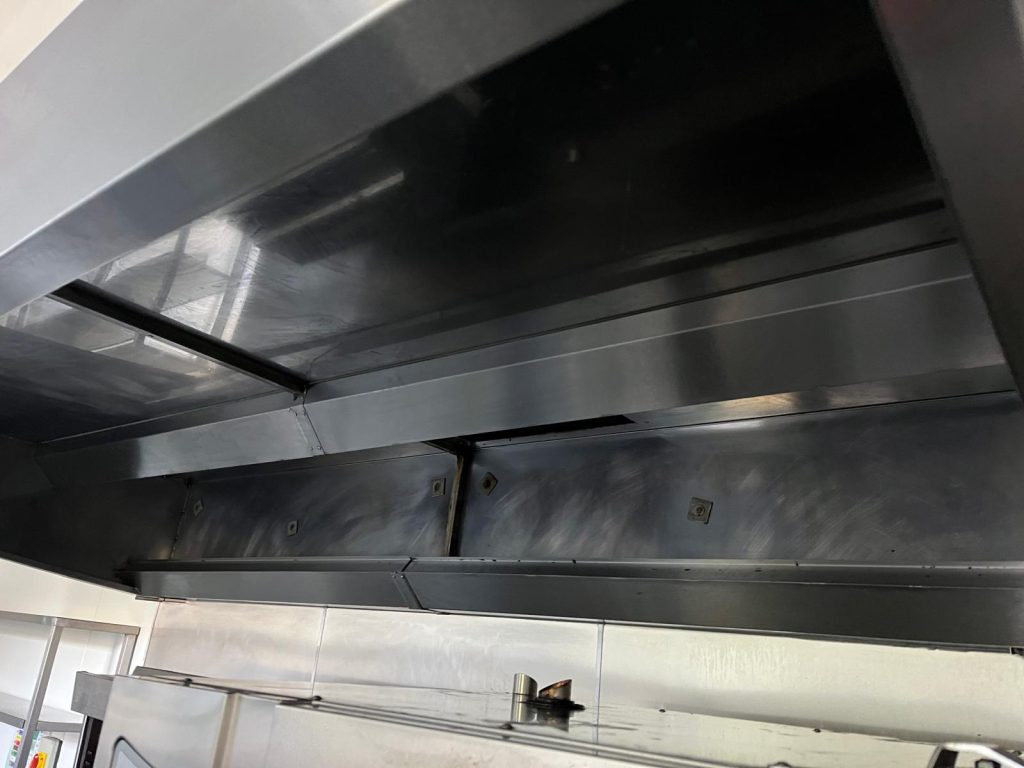
Historic EC Cleaners project imagery illustrates a commercial kitchen extract fan. It is not presented as evidence of an intermittent fault at the photographed premises.
What should you record before the fault is investigated?
- When the fan stops. Record whether it happens at start-up, during service or after prolonged operation.
- What shuts down with it. Note gas supply, appliances, control panels or other linked equipment.
- Warnings or fault codes. Photograph or record any display messages where safe to do so.
- Fan behaviour beforehand. Note weak pull, noise, vibration or changes in speed.
- Cooking conditions. Record which appliances were operating and how busy the kitchen was.
- Recent work. Include cleaning, electrical, mechanical, controls or ventilation changes.
- Previous maintenance. Find the latest fan service, extract cleaning and ventilation records.
Which contractor route may be appropriate?
Mechanical or electrical fan fault
Motor, bearings, drive, electrical supply and control faults need competent mechanical or electrical diagnosis.
Gas interlock issue
Where gas appliances or gas safety controls are involved, use appropriately competent and Gas Safe registered specialists for gas work.
Grease contamination
Where contamination is affecting the fan or extract route, competent kitchen extract cleaning may form part of the corrective work.
Ventilation performance issue
If the fault sits within a wider airflow, replacement air or controls problem, competent ventilation assessment may be needed.
Access problem
If the fan or controls cannot be reached safely for inspection or maintenance, access may need to be resolved first.
Unclear maintenance history
If recent service or cleaning records are incomplete, organise the evidence before issuing another instruction.
Related kitchen extract problem guidance
This page focuses on intermittent fan failure. The related pages cover weak pull, noise and vibration, smoke spillage, excess heat and the wider range of kitchen extraction problems.
Commercial kitchen extract fan cutting out: frequently asked questions
Why does my commercial kitchen extract fan keep cutting out?
Intermittent operation can have several causes, including fan or motor faults, controls, overload protection, electrical supply, interlocks, overheating, contamination or another ventilation problem. The cause should be established by a competent mechanical or ventilation contractor.
Can grease build-up make an extract fan stop working?
Contamination can affect fan components and ventilation performance, but a fan that cuts out should not be assumed to need cleaning only. Mechanical, electrical and control issues may also be involved.
Why do the gas appliances shut off when the extract fan stops?
In relevant commercial catering installations, the mechanical ventilation system may be interlocked with the gas supply. HSE explains that the purpose is for ventilation failure to cause the gas supply to the appliances to shut off so unsafe operating conditions are not created.
Can I bypass the ventilation interlock to keep the kitchen running?
No. HSE guidance states that manual bypasses to ventilation and gas interlock systems are not permitted. A competent person should investigate the fault.
Could overheating cause a kitchen extract fan to cut out?
It may be one possible cause depending on the fan, motor and protection arrangements, but this requires competent diagnosis. Do not repeatedly restart or adjust equipment without understanding why it is stopping.
What should I do if the fan failure is affecting gas or solid fuel appliances?
Follow the site’s safe operating procedures and obtain competent technical advice. Ventilation is safety critical where combustion appliances are involved because inadequate ventilation can allow heat and combustion products, including carbon monoxide, to accumulate.
What information should I send when reporting an intermittent fan fault?
Send the site location, what happens when the fan stops, how often it occurs, whether gas appliances shut down, any warning lights or control messages, recent maintenance records and details of any cleaning, electrical or ventilation work carried out before the fault appeared.
Does the commercial kitchen extract fan keep cutting out or stopping?
Send the site details, symptoms, control information and recent maintenance records. EC can help organise the requirement so mechanical, electrical, interlock, contamination and ventilation issues are separated before the appropriate independent specialist is approached.
Responsibility statement:
EC Cleaners Network is operated by Search and Submit Ltd. Search and Submit Ltd does not inspect, clean, test, survey, design, remediate, certify or technically approve kitchen extraction or ventilation systems. Independent appointed contractors and competent professionals remain responsible for technical assessment, safe working, quotations, physical delivery, reporting, certification and professional conclusions within their appointed scope.
TR19® Grease and TR19® Air are BESA specifications. References are descriptive and no BESA endorsement of or affiliation with EC Cleaners Network is claimed.