
EC Cleaners Network · Multi-Site Contractor Mobilisation
Changing kitchen extract contractors across a portfolio is a data and mobilisation exercise as well as a procurement decision.
The incoming contractor needs a reliable site and system list, current due dates, access information, existing reports, evidence standards and open actions. Without that handover, the new programme can inherit the same gaps while losing the history that explains them.
How many sites are moving and what records are available?
Send the site list, existing contractor schedule, sample reports and any open-action register if available. EC can help organise the commercial handover so the incoming contractor receives a clearer mobilisation pack.
What should happen before the outgoing contractor is replaced?
Start by freezing the current portfolio position. Record every site and extract system, the latest attendance, next planned date, evidence received, known access issues and open recommendations before supplier responsibility changes.
This creates a reference point for mobilisation. Without it, the incoming contractor may inherit due dates without knowing the evidence behind them, or inherit a completed status while access or technical actions remain unresolved.
Change the contractor without losing the history.
Build the contractor handover pack
Site and system register
Give every property and every identifiable extract system a clear reference.
Latest attendance
Record the most recent inspection, clean or related work for each system.
Current due date
Preserve the existing next review or cleaning point and the evidence behind it.
Latest evidence pack
Include reports, certificates, photographs, measurements and known exclusions where available.
Access notes
Record roof access, risers, access panels, landlord permissions and known inaccessible areas.
Open actions
Carry forward access work, further cleaning, technical faults, evidence gaps and external requirements.
Local site rules
Include working hours, induction, permits, shutdown arrangements and site contacts where relevant.
Evidence standard
State what the central team expects after each attendance and how the returned records should be identified.
Do not copy the old schedule without checking it
The outgoing contractor’s schedule is a useful starting point, but the incoming contractor should not be instructed to repeat dates blindly. Check the latest site evidence, current operating pattern, reported grease accumulation, access position and any external requirement before the schedule is adopted.
Where several sites have been running on one standard interval, the contractor change can be a useful point to identify kitchens that need a different review cycle.
Verify current contractor status at appointment
Where VHR approval is relevant to the specification, BESA advises clients to use its official Find a VHR Contractor tool because businesses can claim registration or display the VHR logo when they are not currently approved.
The BESA search tool distinguishes current approved members from statuses such as awaiting approval, suspended, membership expired, voluntary withdrawal and removed from register. Verification should therefore be current at appointment rather than copied from an old supplier record.
Verify current status at mobilisation. Do not inherit an old approval assumption.
Carry unresolved actions into the new contract
A supplier change should not reset inaccessible ductwork, missing reports, partial cleans, recurring recommendations or technical faults. These are property actions, not supplier-history notes.
Transfer them into the new programme with the original source, current status, owner and next action. Where the outgoing supplier was waiting for access, another trade or landlord permission, make that dependency visible before the incoming supplier’s first attendance.
Set the evidence standard before the first visit
A new supplier should not have to discover the portfolio’s reporting expectations after completing the work. Define the required site identity, system reference, scope description, photographs, measurements, certificate, exclusions and outstanding-action reporting in the mobilisation brief.
This is particularly important where several regional contractors feed evidence into one central FM system. A common evidence structure makes the records easier to compare even when delivery is split geographically.
One contractor is not always necessary for the whole estate
A national contractor can simplify communication, but a regional model may be more practical where sites are widely dispersed or require different access, working hours or local capability.
The central standard can remain the same while delivery is divided between approved contractors. What matters is that site identity, scope, evidence, contractor status and escalation rules remain consistent across the programme.
Standardise the control framework even when delivery is regional.
What should happen during the first mobilisation cycle?
- Confirm the estate list. Make sure all properties and extract systems are present.
- Confirm the schedule. Review inherited dates against the current evidence.
- Confirm access. Test that roof, riser and site-permission information is still correct.
- Confirm contractor verification. Check current registration or approval where required.
- Confirm evidence format. Agree naming, report, certificate and photograph expectations.
- Resolve priority exceptions. Deal with access, technical and external-deadline items first where appropriate.
- Complete initial attendances. Use the first cycle to validate the inherited site information.
- Correct the register. Update system, access and scheduling details where site reality differs from the inherited records.
What if the outgoing and incoming reports use different terminology?
Do not force unlike records into the same status without understanding the difference. Contractors may describe system sections, completion status or recommendations differently.
Use the physical system and the intended evidence fields as the common reference. Where wording remains unclear, ask the relevant contractor to clarify what was included, excluded or left outstanding.
Historic project context
Contractor mobilisation succeeds or fails at site level. The central programme may be national, but each attendance still depends on a real fan, duct route, access arrangement and working environment.
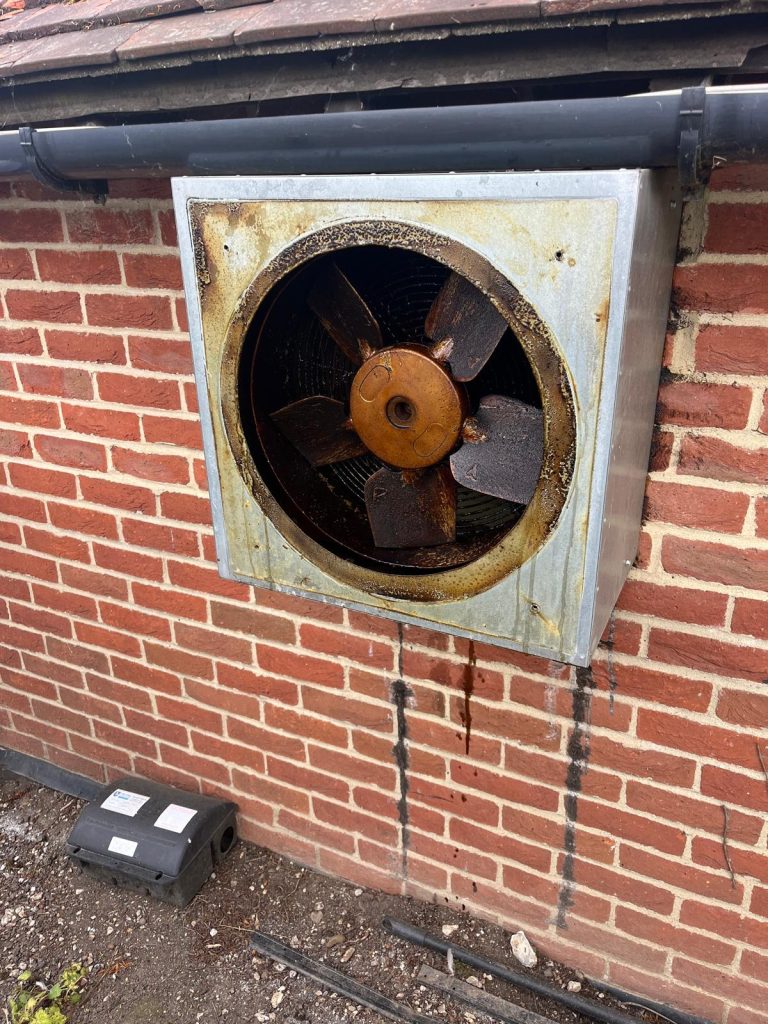
Historic EC Cleaners project imagery is used to illustrate system-level delivery context. It is not presented as evidence about any current contractor transition or multi-site estate.
A practical contractor-change sequence
- Freeze the current portfolio position. Site list, due dates, evidence and open actions.
- Collect the outgoing records. Reports, certificates, access notes and current schedule where contractually available.
- Clean the register. Remove duplicates, identify missing systems and flag uncertain data.
- Verify the incoming contractor. Check relevant capability, coverage and current registration where required.
- Issue the mobilisation pack. Site data, system scope, access, local rules and evidence expectations.
- Transfer open actions. Keep unresolved property issues active through the supplier change.
- Validate the first cycle. Compare inherited records with what the new contractor finds on site.
- Update the programme. Correct due dates, access notes and evidence fields using the current information.
What EC can help organise
Mobilisation register
Customer-supplied site lists, due dates, contractor records and open actions can be consolidated for handover.
Evidence transfer
Reports and certificates can be matched to the correct property and system before mobilisation.
Exception handover
Access issues, partial work, technical faults and missing evidence can remain visible across the supplier change.
Contractor questions
Commercial clarification points can be prepared for outgoing and incoming suppliers before the new programme begins.
EC does not appoint contractors on behalf of the client, determine technical competence, certify TR19 compliance or replace formal procurement, legal, insurance or professional advice.
Changing kitchen extract contractors: frequently asked questions
What should a multi-site organisation check when changing kitchen extract contractors?
Start with the site and system register, current due dates, unresolved actions, access requirements, existing reports, certificate status and the commercial standard expected from the incoming contractor. The new contractor should receive a clear mobilisation pack rather than having to reconstruct the estate from invoices and old emails.
Should the incoming contractor simply continue the outgoing contractor’s schedule?
Not automatically. The existing schedule is useful evidence, but due dates should still be checked against the latest site reports, current operation, grease accumulation, access position and any insurer, landlord or fire-risk requirements.
What records should the outgoing contractor provide?
Where available under the contract, useful handover records include site lists, system references, attendance history, reports, certificates, photographs, measurements, access notes, open recommendations and planned future dates.
Should VHR status be checked again when changing contractor?
Yes where VHR approval is relevant to the specification. BESA advises clients to verify current status through the official Find a VHR Contractor tool rather than relying on an old logo, certificate or previous approval.
What if different regions need different contractors?
A regional delivery model can work if the central specification, evidence standard and reporting structure remain consistent while contractor capability and coverage are matched to local sites.
How should unresolved actions be transferred during mobilisation?
Carry them into the new programme as open actions with the original source, current owner and next step. Do not reset access problems, missing evidence, technical faults or partial cleans simply because the supplier has changed.
What should the incoming contractor receive before the first visit?
Provide the correct site and system identity, current scope, latest evidence, known access constraints, relevant external requirements, local working arrangements, emergency or escalation contacts and the evidence expected after completion.
Changing kitchen extract contractors across several sites?
Send the site list, existing contractor schedule and sample evidence. EC can help organise the mobilisation records, open actions, due dates and evidence requirements so the incoming contractor starts with a clearer portfolio position.
Responsibility statement:
EC Cleaners Network is operated by Search and Submit Ltd. Search and Submit Ltd does not inspect, clean, test, survey, design, remediate, certify or technically approve kitchen extraction or ventilation systems. Independent appointed contractors and competent professionals remain responsible for technical assessment, safe working, quotations, physical delivery, reporting, certification and professional conclusions within their appointed scope.
TR19® Grease and TR19® Air are BESA specifications. References are descriptive and no BESA endorsement of or affiliation with EC Cleaners Network is claimed.